Stop treating your high-value stainless steel tubes like common scrap. In the steel service center business, “digging” for the right heat number with a forklift isn’t just a waste of time—it’s a liability. Every time you move a bundle to get to the one beneath it, you risk surface scratches that ruin sanitary compliance. It’s time to switch to a system that matches the precision of your laser cutters.
The Hidden Cost of “Digging” in Metal Fabrication
For operations managers at steel service centers—especially those dealing with high-purity stainless steel tubes or expensive alloy bars—the traditional method of storage is a silent profit killer. You are likely using standard static cantilever racks or, worse, floor stacking. This creates a “First-In, Last-Out” (FILO) nightmare.
Consider the daily reality: A work order comes in for a specific bundle of 316L polished tubing located at the bottom of a stack. To get it, your forklift operator must move three other bundles. This is secondary handling. It takes 20 minutes of non-value-added labor. But the real cost isn’t time; it’s the risk. With every move, forks scrape against adjacent bundles. For sanitary tube manufacturers where surface Roughness Average (Ra) is critical, a single deep scratch turns a premium product into scrap metal.
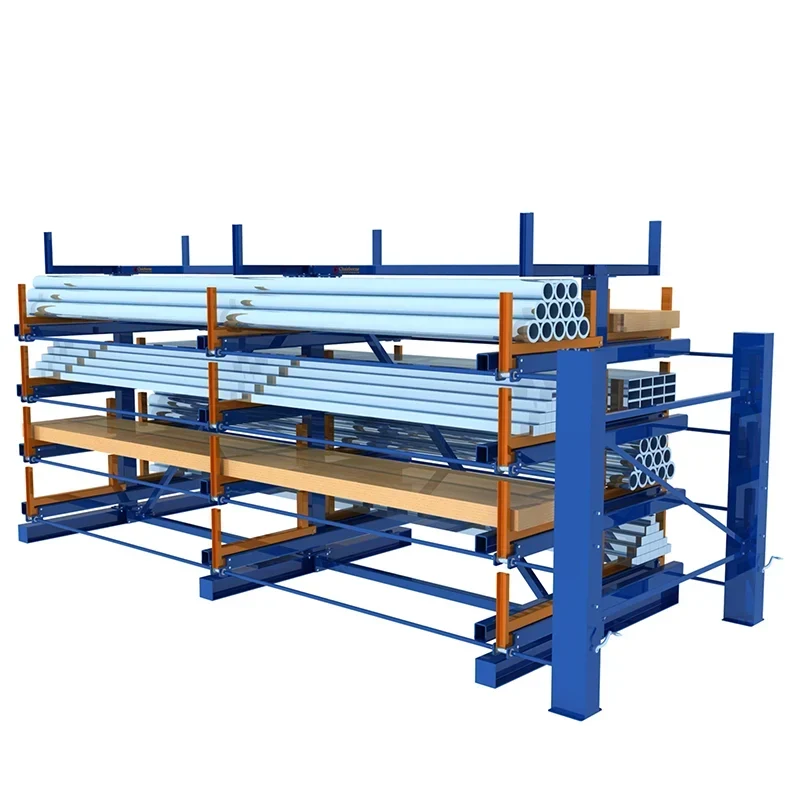
Figure 1: Manual crank-out systems allow distinct separation of material bundles, eliminating contact damage.
The Logic: From Forklift to Overhead Crane
The solution lies in changing how you access the material. Telescopic cantilever rack systems (also known as roll-out or crank-out racks) are designed to extend 100% out of the rack structure. This seemingly simple mechanical change fundamentally alters your warehouse logistics.
By allowing the arms to extend fully, you unlock the ability to use an overhead crane for picking. Unlike forklifts, which require wide aisles and attack the load from the side (often blindly), a crane lifts vertically. This “pick and lift” motion is safer and far more precise. It eliminates the need for wide maneuvering aisles, allowing you to condense your storage footprint significantly.
For heavy-duty applications, such as storing solid steel bars or thick-wall pipes, we offer roll out cantilever systems that can handle loads upwards of 6,000 lbs per arm level. Whether you choose a manual crank or an electric drive, the result is the same: the material comes to you, you don’t go digging for it.
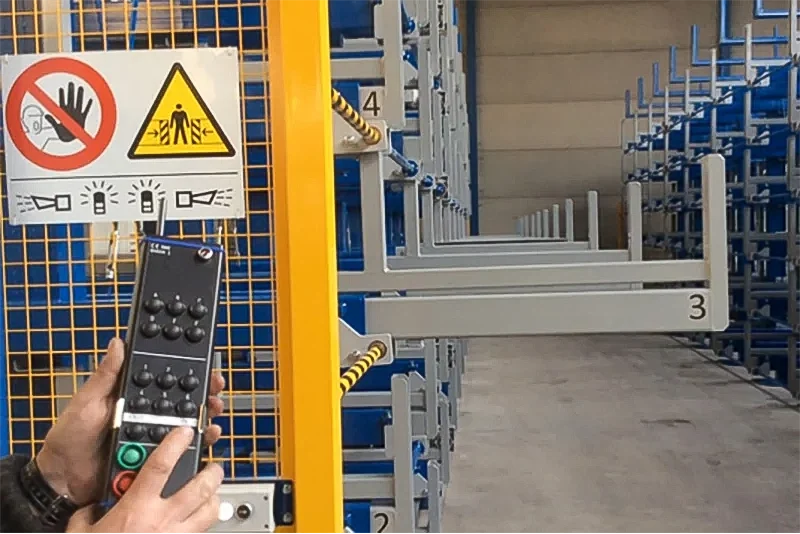
Figure 2: Electric roll-out systems are ideal for high-frequency access in heavy manufacturing environments.
Feeding the Machine: A Production Flow Upgrade
The most strategic placement for a crank out cantilever rack is directly next to your processing equipment—your tube lasers, band saws, or CNC machines. Instead of waiting 15-20 minutes for a forklift to fetch raw materials from a distant warehouse sector, the machine operator can simply crank out the required drawer, attach the crane straps, and load the machine in under 3 minutes.
This point-of-use storage strategy minimizes machine downtime. In a high-volume fabrication shop, keeping the laser cutter running is the difference between hitting a deadline and paying overtime. Furthermore, the organized drawers allow for perfect inventory visibility. You can instantly see stock levels of specific diameters or alloys without climbing or shifting dunnage.
Structural Integrity and Safety
Storing 20-foot lengths of steel pipe requires a structure that is absolutely rigid. Our racks are built using high-strength structural steel profiles, not light-gauge roll-formed steel. The bases are anchored deeply into the concrete to resist the moment forces generated when fully loaded arms are extended.
Safety is paramount when handling heavy, unstable round objects like pipes. Our systems can be fitted with end-stops and divider pins to prevent pipes from rolling off. Moreover, the ergonomic design reduces the physical strain on workers. A single operator can extend a drawer loaded with 5,000 lbs of steel with minimal effort, thanks to high-quality bearing systems.
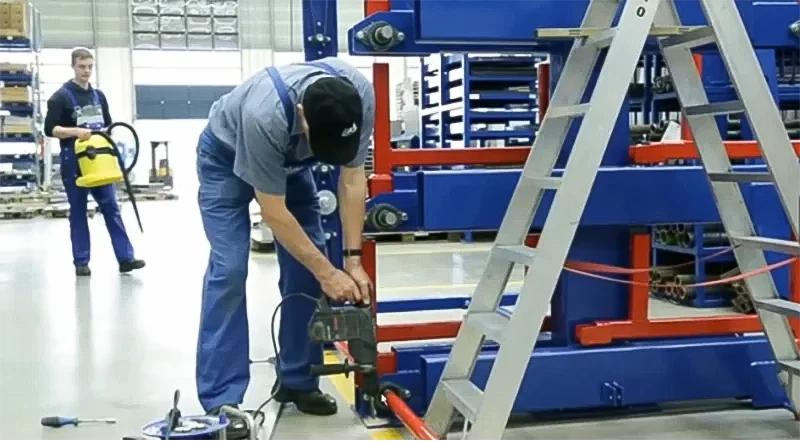
Figure 3: Secure anchoring is critical for stability when extending heavy loads of pipe and tubing.
Technical Specifications for Heavy Duty Pipe Racks
| Feature | Specification |
|---|---|
| Material Suitability | Steel Pipes, Stainless Tubing, Solid Bars, H-Beams |
| Load Capacity | Up to 11,000 lbs per drawer level |
| Extension | 100% Full Extension (Clear overhead access) |
| Standard Lengths | Accommodates 12′, 20′, and 24′ material lengths |
| Operation Mode | Manual Crank or Electric Motorized |
| Access Method | Overhead Crane / Gantry Crane / Vacuum Lifter |
Frequently Asked Questions (Steel Service Centers)
Q1: We store polished sanitary stainless steel tubes. Can these racks prevent scratching?
Yes. Unlike standard racks where forks scrape the material, roll out cantilever racks allow for vertical lifting via crane straps, eliminating metal-on-metal contact during retrieval. We can also provide UHMW (plastic) liners on the cantilever arms to further protect the surface finish of your tubes.
Q2: My facility uses 20-foot (6-meter) pipe bundles. Is the rack stable when fully extended?
Absolutely. Stability is engineered into the design. We use multiple structural steel towers tied together with cross-bracing. When a 20-foot drawer is extended, the load is distributed through heavy-duty bearings and countered by the anchored base and the weight of the structure itself.
Q3: Can we use a vacuum lifter with this system?
Yes, this is the ideal scenario. Because the drawers extend 100%, the entire length of the pipe is accessible from above. This allows vacuum lifters or magnetic lifters to engage the load without obstruction, which is impossible with static shelf racks.
Q4: How much aisle space can I save compared to forklift access?
A standard heavy-duty forklift handling 20-foot pipes requires an aisle width of 15 to 20 feet for turning. With a crane-accessible telescopic cantilever rack, you can reduce the aisle width to just what is needed for a person to walk (approx. 3-4 feet) or eliminate the aisle entirely if using a “wall-to-wall” setup, potentially reclaiming 50% of your floor space.
Q5: What is the lead time for a custom rack designed for heavy wall pipe?
Since we customize the arm length and bearing capacity based on your specific pipe schedule and bundle weight, manufacturing typically takes 4-6 weeks. However, installation is fast due to the modular, bolted design.
Need a Custom Storage Solution?
Speak directly with our technical engineers. We offer free structural designs, heavy-duty catalog evaluations, and quick B2B price quotations.
Request a Quote Now →