Is your 20Ra surface finish being ruined by forklift forks?
For high-purity stainless steel tube manufacturers and metal service centers, the cost of a scratched tube isn’t just “damage”—it’s immediate scrap. If you are struggling to access specific bundles of bar stock without moving three other layers first, or if your laser cutters are idling while operators fish for materials, your storage method is the bottleneck. Stop the “digging.” Start accessing.
The “Hidden Factory” in Metal Service Centers: Why Floor Stacking Kills Profit
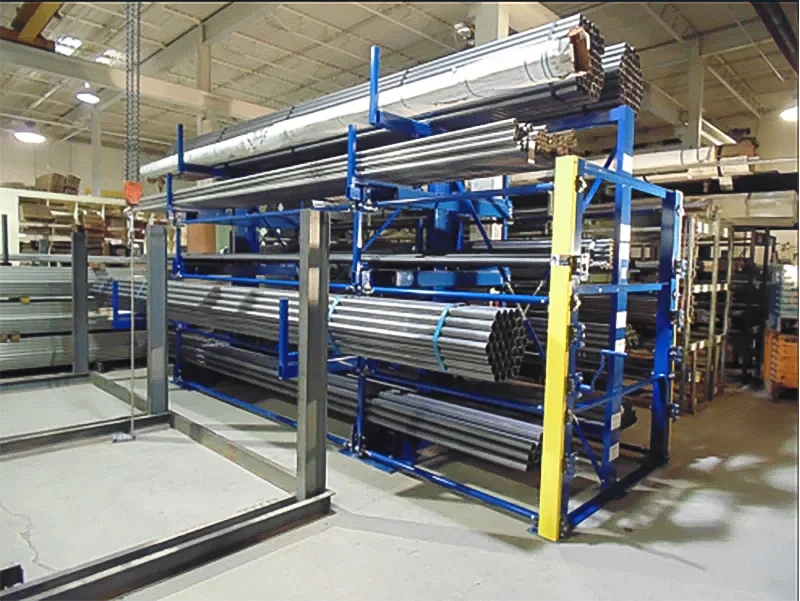
In the world of high-value metal distribution—specifically for industries requiring ASME BPE standards like pharmaceutical and food processing—material integrity is everything. When you store 6-meter polished stainless steel tubes or heavy extruded aluminum profiles using traditional static racks or floor stacking, you are inviting three silent profit killers into your warehouse:
- The “Secondary Handling” Tax: To get to the specific heat number or alloy grade at the bottom of the stack, your forklift driver has to move the top three bundles. This “digging” takes 15-25 minutes. During that time, your band saws and CNC machines are cutting nothing but air.
- Surface Integrity Risk: Every time a forklift tine slides between bundles of hygienic tubing, there is a risk of metal-on-metal contact. For tubes requiring strict surface roughness limits (e.g., < 20Ra), a single gouge renders the entire length unusable for sanitary applications.
- The Aisle Waste: Traditional cantilever racks require massive 12-14 foot aisles for forklifts to maneuver long loads. In a facility where price per square foot is rising, paying to store air is not a strategy.
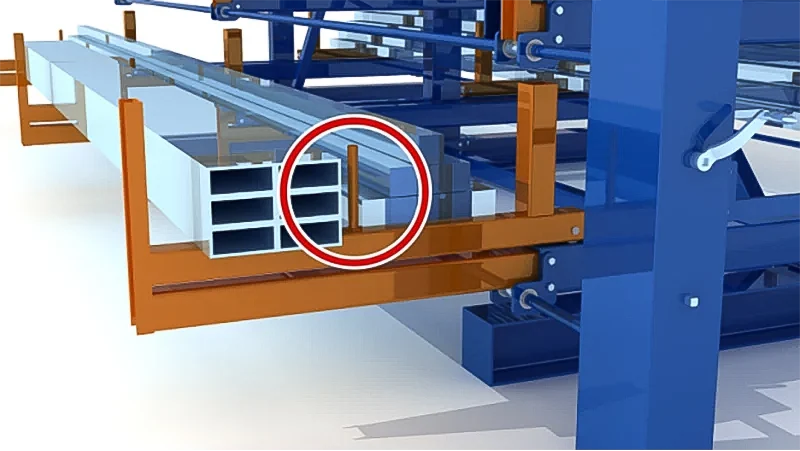
Full extension capabilities allow for immediate visual inspection and access to stock.
The Logic: Turning Racks into Drawers
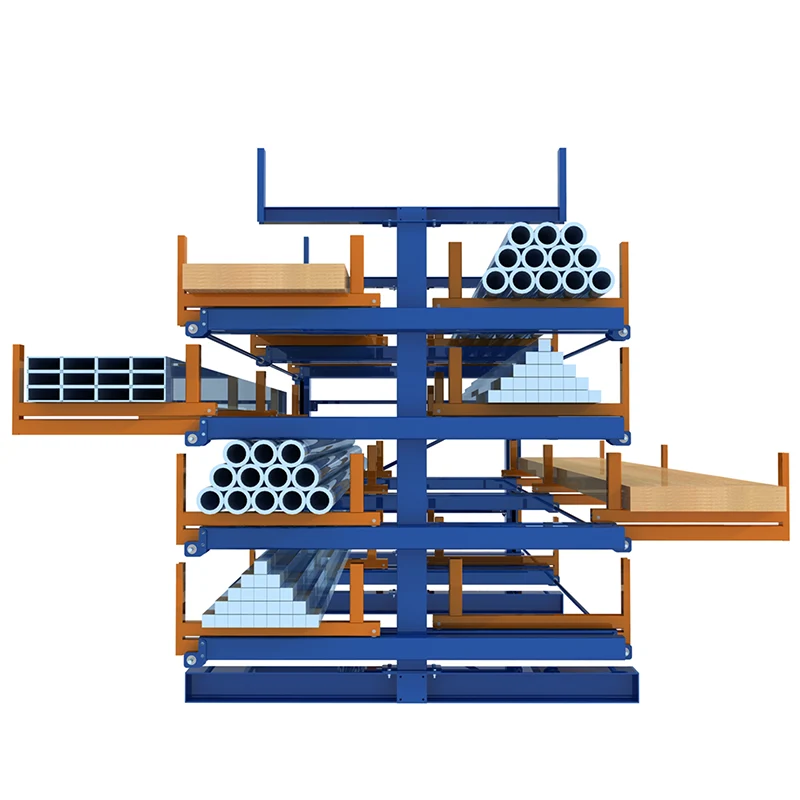
The solution lies in changing the mechanics of retrieval. Retractable cantilever racking, also known as crank-out racking, transforms static storage into a dynamic machine tool accessory.
Instead of driving a forklift into the rack, the rack comes out to you. Each level functions as an independent drawer that can be extended 100% clear of the overhead structure. This simple mechanical shift fundamentally changes your workflow:
1. Overhead Crane Access (The “No-Touch” Method)
Once the drawer is cranked out, the material is completely exposed from above. This allows you to use an overhead crane or vacuum lifter to pick up delicate stainless steel tubes or heavy bars. By eliminating the forklift from the extraction process, you eliminate the primary source of impact damage and “crush” incidents. You can pick a single tube or a full bundle with surgical precision.
2. Density without Danger
Because you load and unload from the top via crane, you no longer need wide maneuvering aisles for forklifts. You can condense your storage footprint by up to 50%. For a Steel Service Center, this means you can fit more inventory—such as diverse SKUs of rod stock, structural tubing, and angles—into the same square footage, or free up floor space for an additional laser cutting station.
Built for Heavy Metal: Structure and Specs
This is not light-duty shelving. Our telescopic cantilever racks are engineered specifically for the extreme weights of solid steel bars and thick-wall pipes.
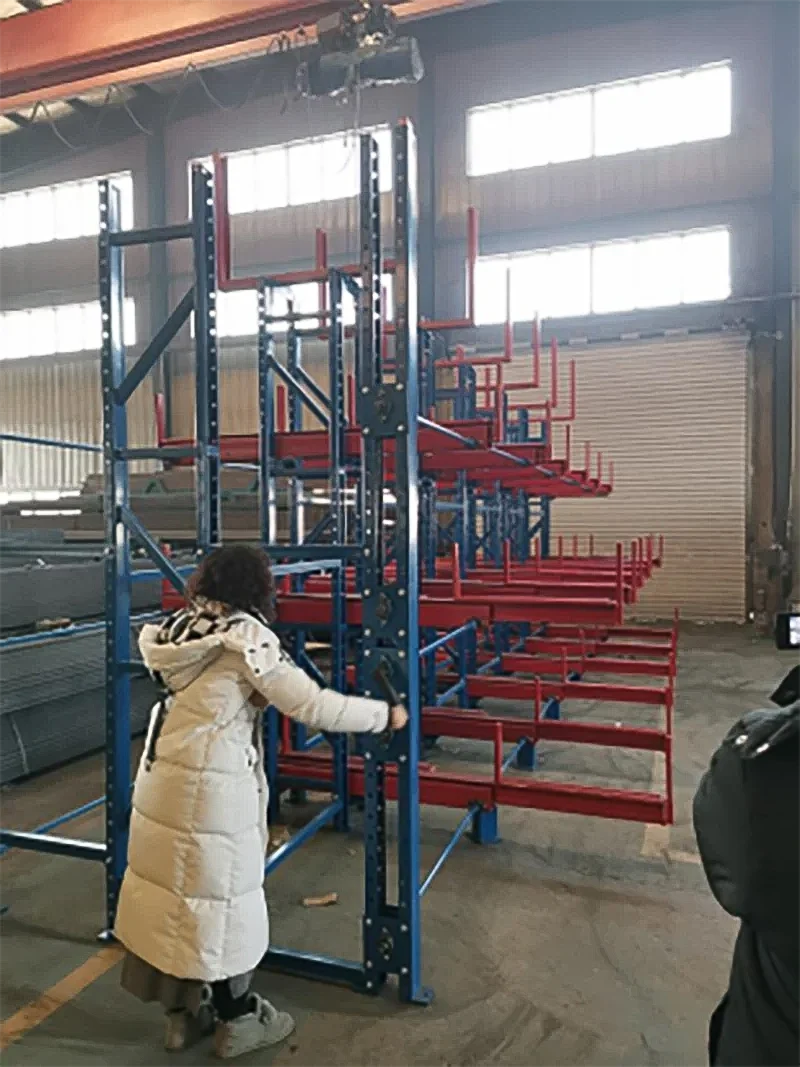
The system utilizes a robust H-beam base and high-tensile structural steel columns to ensure stability even when fully loaded drawers are extended. Whether you choose a manual crank system (efficient for loads up to 6,600 lbs per arm level) or an electric drive for heavier duties, the transmission is designed for smooth, one-person operation.
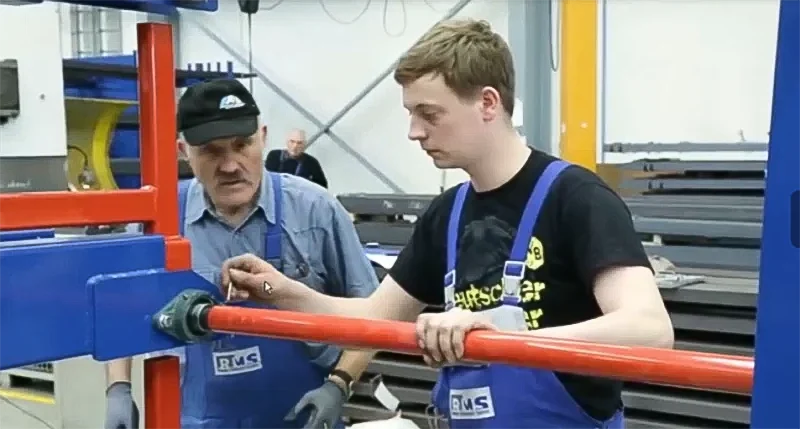
Precision bearings and transmission shafts ensure one operator can move tons of steel effortlessly.
For facilities handling finished components, we offer optional UHMW (Ultra-High Molecular Weight Polyethylene) liners on the cantilever arms. This acts as a soft interface, ensuring that your polished stainless steel never touches raw structural steel, preserving that critical surface finish from the mill to the customer.
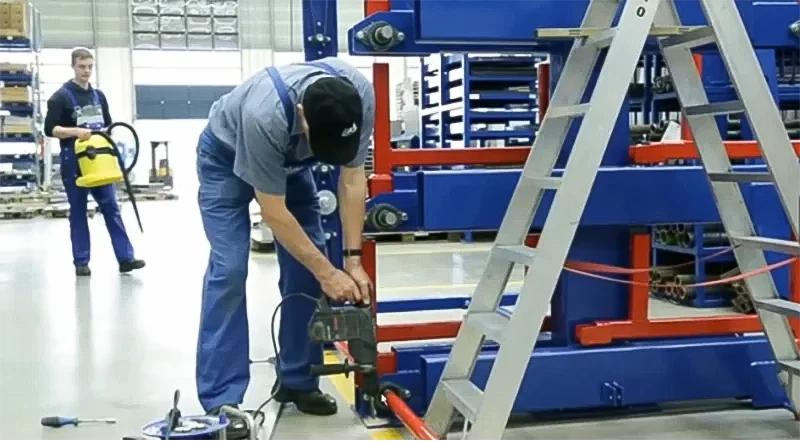
Summary: The Operational Shift
Switching to a retractable system is not just about buying a rack; it is about upgrading your production velocity. By matching your storage method to your retrieval method (cranes), you achieve:
- Reduced Changeover Time: From 20 minutes of “digging” to 3 minutes of picking.
- Zero Damage: Protecting the value of high-alloy inventory.
- Maximized Space: Reclaiming 50% of your floor for value-added processing.
Frequently Asked Questions (FAQ)
Q1: Can we store variable lengths of tubing (e.g., 20ft and 10ft remnants) on the same level?
Yes. The crank out cantilever rack arms provide full support along the length. For short remnants or “drops” from the saw, we can install steel pans or baskets on the arms to prevent short pieces from falling through.
Q2: Our stainless steel tubes are highly sensitive to carbon contamination. How do you handle this?
We understand the risk of ferritic contamination on austenitic stainless steel. We can provide arms lined with UHMW plastic or rubber strips to ensure there is no direct contact between the carbon steel rack structure and your stainless inventory.
Q3: What is the maximum length of bar stock we can store?
The system is modular. By adding vertical columns, we can accommodate any length, from standard 20-foot (6m) bundles to custom 40-foot extrusions, while maintaining the necessary deflection limits to prevent material bending.
Q4: Do we need a special foundation for these racks?
Because of the high-density loading (often exceeding 20,000 lbs per column), a standard 6-inch reinforced concrete slab is usually sufficient, but we will calculate the specific point loads based on your inventory to confirm if your current floor meets the PSI requirements.
Q5: Can the system be automated later?
While manual crank systems are standalone, our electric roll-out versions can be integrated with warehouse management systems (WMS) for location tracking, though full automation usually requires a different stacker-crane configuration.
Need a Custom Storage Solution?
Speak directly with our technical engineers. We offer free structural designs, heavy-duty catalog evaluations, and quick B2B price quotations.
Request a Quote Now →