Stop treating your high-purity stainless steel tubes like common scrap. When your laser cutting machine is idling because the operator is “digging” for the right material bundle with a forklift, you are bleeding profit. It’s time to switch from chaotic floor stacking to a precision overhead crane accessible system that protects your surface finishes and feeds your production line in minutes, not hours.
The “Hidden Factory” in Metal Service Centers: Why Floor Stacking Kills Efficiency
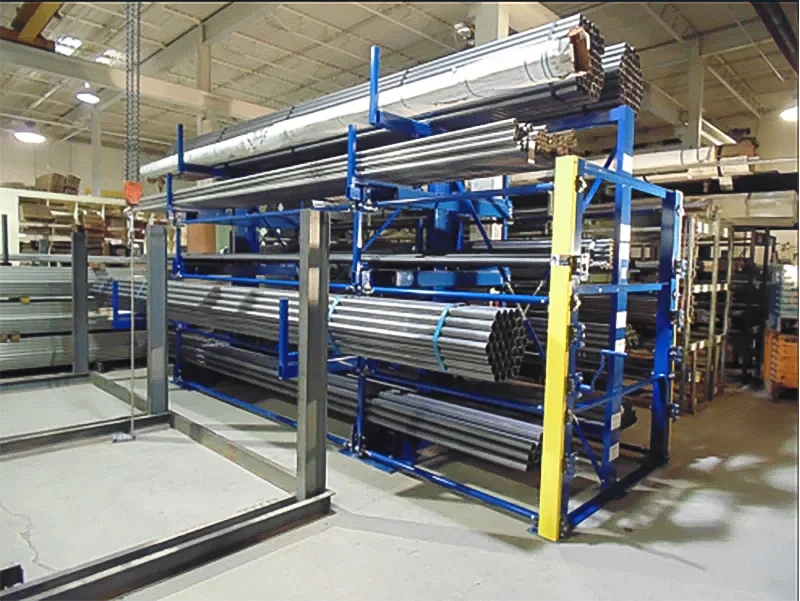
In the high-stakes world of metal fabrication and steel distribution—especially for companies dealing with high-purity stainless steel tubes, pipes, and profiles—the method of storage dictates the speed of production. Traditional static cantilever racks or, worse, floor stacking, create a bottleneck that we call the “Hidden Factory.”
Consider a typical scenario at a sanitary tube manufacturer like GHWA. You have bundles of 20ft polished stainless steel tubing. To get to the specific heat number required for a pharmaceutical client, your forklift operator has to move three other bundles sitting on top or in front of it. This is “Double Handling.”
Every time a forklift tine touches a bundle to move it out of the way, two things happen:
- Surface Damage Risk: For industries requiring ASME BPE standards, a single scratch from a fork slip or bundle collision means that expensive 316L tube is now scrap metal.
- Downtime: While the operator is shuffling inventory, your saw cutting machine or laser bed is sitting empty.
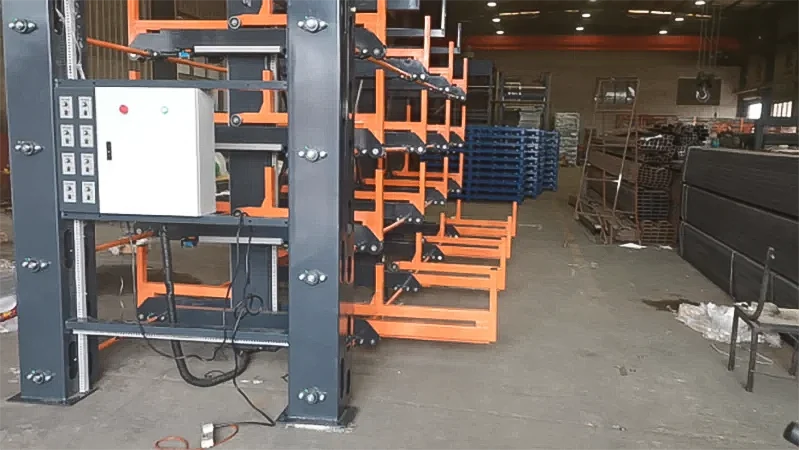
Figure 1: High-density storage requiring overhead crane access to eliminate forklift aisles.
The Logic of Telescopic Racking: From Forklift to Overhead Crane
The solution lies in changing the retrieval method. A Telescopic Cantilever Rack (also known as a roll-out or crank-out system) transforms your storage from static shelves into dynamic drawers.
Here is the operational shift:
- 100% Extension: Each level extends fully out of the rack structure.
- Overhead Crane Dominance: Instead of maneuvering a wide forklift into a narrow aisle, you simply crank out the drawer and use your shop’s overhead crane or vacuum lifter to pick the bundle straight up.
- Zero Contact: Because you are lifting vertically with nylon slings or suction pads, the risk of scratching the polished surface of adjacent tubes is virtually zero.
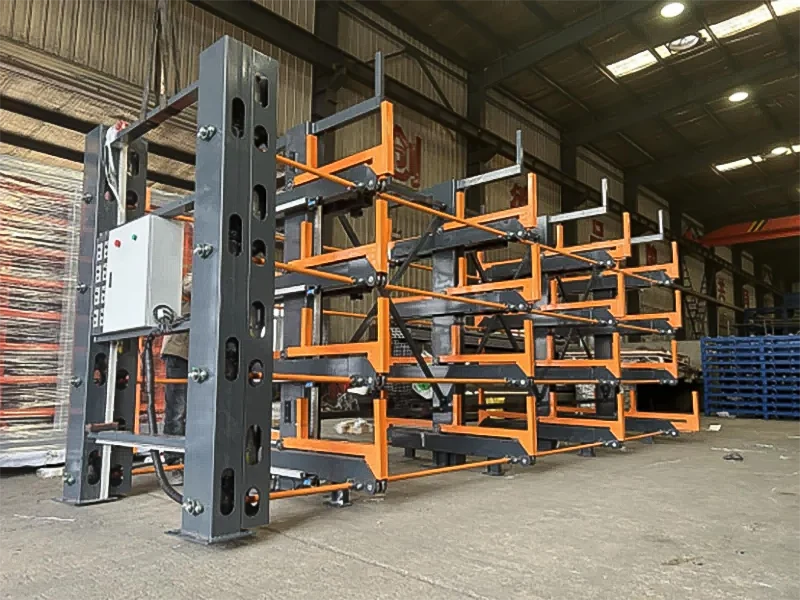
Figure 2: The manual crank mechanism allows a single operator to move tons of steel with minimal effort.
Manual vs. Electric: Matching the System to Your Throughput
For high-frequency environments, such as feeding a laser cutter 24/7, speed is paramount. While the crank out cantilever rack is perfect for general storage, heavy-duty applications often require automation.
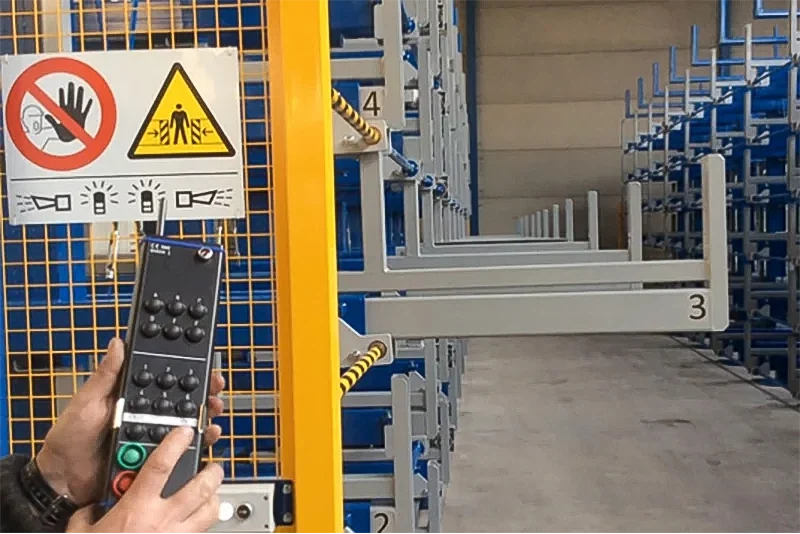
Our electric systems allow operators to control the racks via remote, keeping them at a safe distance while handling bundles weighing up to 11,000 lbs (5,000 kg) per level. This is critical when handling dense bar stock or large-diameter thick-wall pipes.
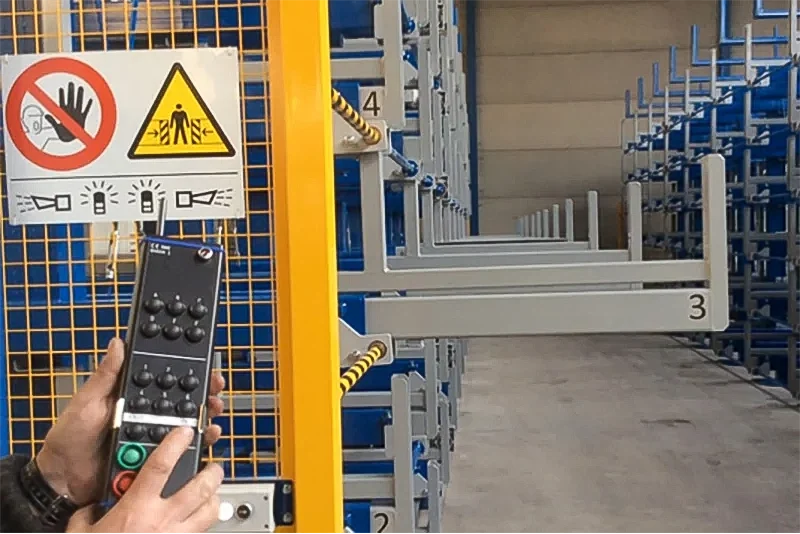
Figure 3: Electric drive systems enable remote operation for heavy-duty tube and pipe handling.
Built for Heavy Industry: Specifications & Installation
This is not light-duty shelving. It is structural steel engineering designed to withstand the rigors of a steel service center. The base is constructed from heavy H-beams to prevent tipping, even when fully loaded drawers are extended.
Installation requires precision. As shown below, the units must be anchored to a reinforced concrete floor using heavy-duty expansion bolts. This ensures that the dynamic forces of the roll-out cantilever mechanism are safely transferred to the ground.
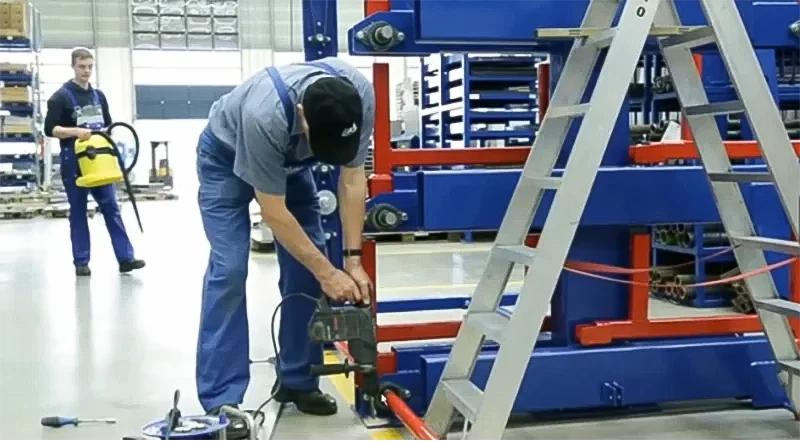
Figure 4: Secure anchoring is non-negotiable for ensuring the stability of dynamic telescopic racks.
Standard Specifications for Metal Profiles
| Feature | Specification Range |
|---|---|
| Arm Length | 20″ to 60″ (Customizable for sheet or bundles) |
| Load Capacity | 1,000 lbs to 11,000 lbs per arm level |
| Rack Height | Up to 20 ft (Maximize vertical airspace) |
| Material Length | Ideal for 20ft (6m) or 40ft (12m) tubes and profiles |
| Operation | Manual Crank or Electric Motorized |
FAQ: Solutions for Metal Fabricators
Q1: Can we store 20ft (6 meter) stainless steel tubes on this rack?
Yes, this is the primary use case. We configure the number of towers (columns) to support the full length of the tube, preventing sagging or bowing which is critical for maintaining straightness for laser feeders.
Q2: My tubes have a mirror finish (Ra < 10 µin). Will the arms scratch them?
We offer optional UHMW (Ultra-High Molecular Weight Polyethylene) liners for the cantilever arms. However, the primary protection comes from the process: because you use an overhead crane with nylon slings to lift straight up, the material never slides against the rack arm.
Q3: How much aisle space can I save?
Traditional forklift-loaded cantilever racks require aisles of 12-15 feet to allow for the turning radius of a sideloader or heavy forklift. Overhead crane accessible racking requires zero aisle width for maneuvering, often recovering 50% of your floor space.
Q4: Is the crank mechanism hard to operate with a full 3-ton load?
No. The system uses a high-ratio gear reduction box and industrial bearings. A single operator can crank out a fully loaded drawer with one hand. The start-up force required is minimal.
Q5: Can this system be integrated directly next to my laser cutting machine?
Absolutely. Many of our clients, including steel service centers, place these racks directly at the in-feed of their lasers or saws. This creates a “Point of Use” storage system, reducing travel time significantly.
Need a Custom Storage Solution?
Speak directly with our technical engineers. We offer free structural designs, heavy-duty catalog evaluations, and quick B2B price quotations.
Request a Quote Now →