Is your saw cutting machine waiting for material more than it’s cutting? The time your crew spends digging through floor stacks for the right bundle of bar stock is a hidden factory of waste, killing your productivity and putting them at risk. There is a faster, safer way to feed your primary processing equipment.
The Daily Grind: Why Your Current Bar Stock Storage is a Profit Killer
In any steel service center, the floor is where money is made or lost. The current reality for many is a chaotic landscape of stacked steel bundles. Your crew plays a daily game of “material Tetris,” using an overhead crane to perform “secondary handling”—moving three bundles just to access the one needed for the next job on the saw. During this 15-to-25-minute treasure hunt, your multi-million dollar cutting line sits idle. This isn’t just inefficient; it’s a direct drain on your throughput and a constant safety hazard. Every time a bundle is re-handled, you risk damaging high-value material, or worse, creating a dangerous situation for your team.
This “First-In, Last-Out” (FILO) method forces you to dedicate huge, valuable floor areas to what is essentially organized clutter. That’s space that could be generating revenue with a new plasma table or press brake.
A Fundamental Shift: From Forklift Mazes to Direct Crane Access
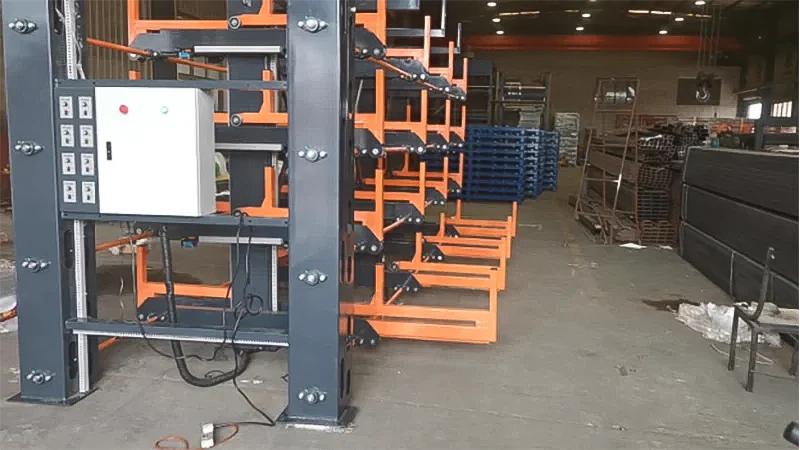
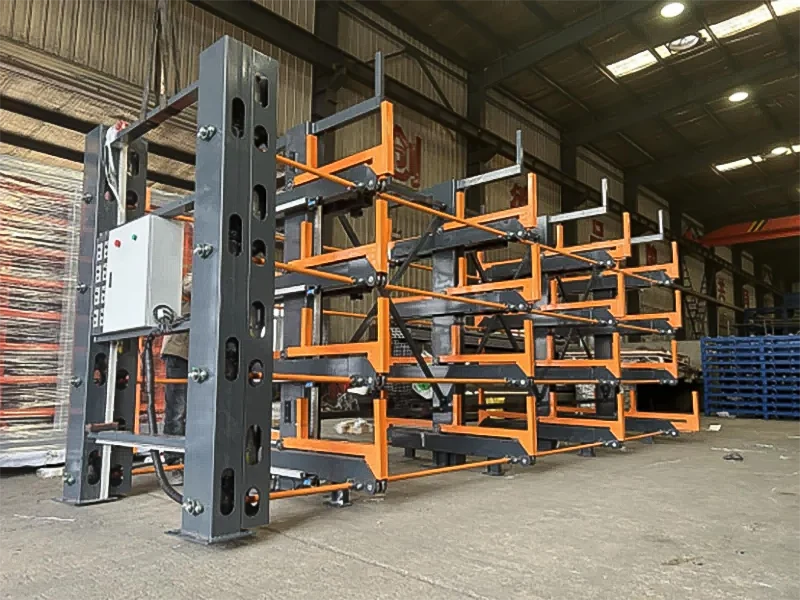
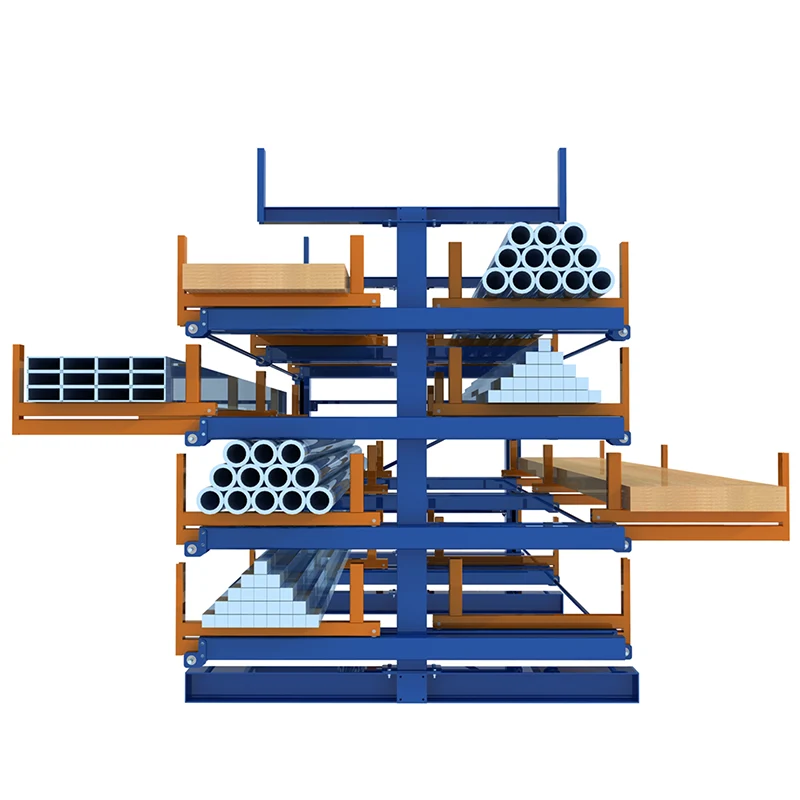
The solution isn’t about working harder; it’s about changing the very mechanics of storage and retrieval. The crank out cantilever rack transforms your vertical space into a high-density, fully accessible inventory system. Its core innovation is that every single storage level acts like a massive, heavy-duty drawer. These arms extend 100% out from the main structure, presenting a specific bundle of material in an open, accessible position, ready for your overhead crane.
This simple but powerful change completely eliminates the need for “secondary handling” and the wide, wasteful aisles required for forklifts. Your overhead crane now has direct, unimpeded vertical access to every single item in your inventory. We offer two primary operational models to fit your workflow:
Manual Crank-Out: Precision and Control for Workstations
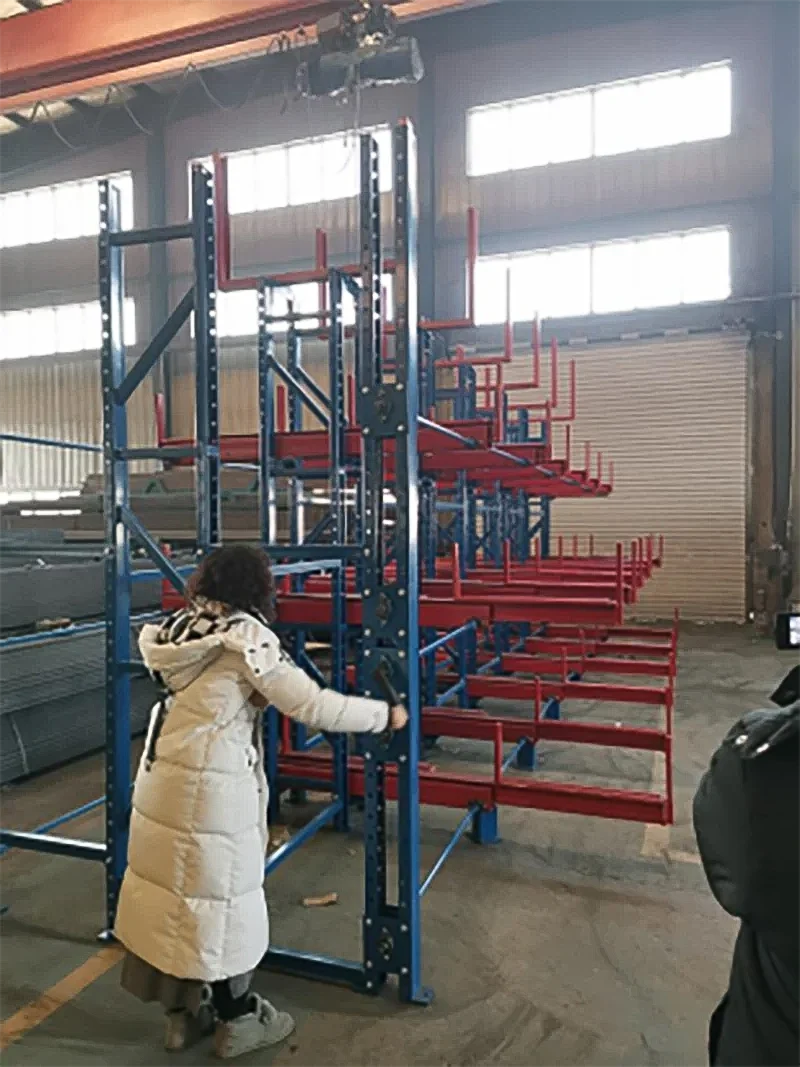
Ideal for point-of-use storage next to a specific machine or for materials with lower access frequency. A single operator uses a detachable hand crank to smoothly roll out levels carrying up to 6,000 lbs of material. The precision-engineered gear mechanism makes the operation surprisingly effortless, giving your team safe, direct access to the exact bar stock they need without waiting for a crane or forklift.
Motorized Roll-Out: Maximum Speed for High-Volume Operations
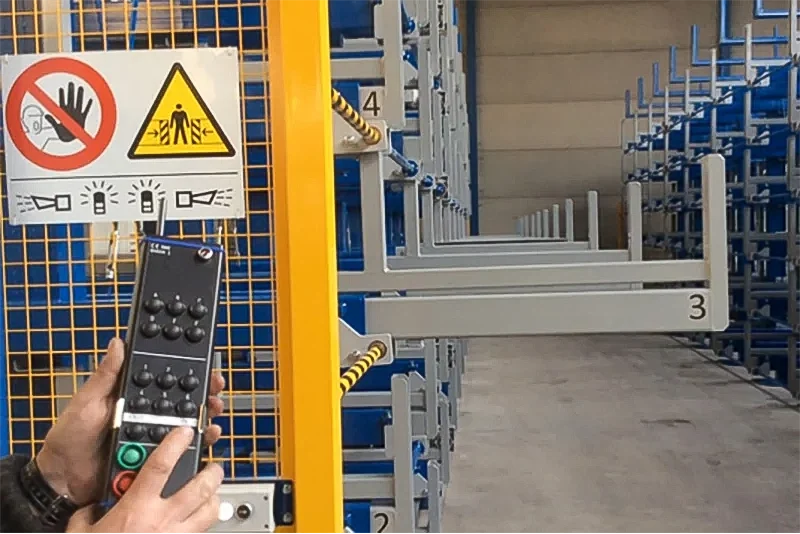
For primary storage areas that feed your main production lines, the electric, motorized system is the ultimate efficiency tool. Using a simple handheld remote, the operator can select and extend the desired level in seconds. This is the ideal solution for high-frequency environments, drastically reducing wait times and maximizing the uptime of your most valuable cutting and processing equipment.
The Tangible Returns: More Cuts Per Shift, More Floor Space, and a Safer Crew
Implementing a Telescopic Cantilever Rack system translates directly into measurable operational improvements.
- Radical Efficiency Boost: Slash material retrieval times from a typical 15-25 minutes down to under 3 minutes. This translates to hours of additional production capacity for your saws and other machines each week.
- Reclaim 50% of Your Floor Space: By eliminating forklift aisles and stacking vertically, you can store the same amount of material in half the footprint. That freed-up space is your key to expansion—add a new machine and increase your revenue streams without a costly building extension.
- Engineer Out the Risk: This system is fundamentally safer. By replacing forklift-based retrieval with overhead crane accessible racking, you eliminate the primary cause of accidents in steel storage areas: the chaotic and dangerous interaction between moving vehicles, personnel, and precariously stacked heavy materials.
Built for the Steel Industry: Engineering That Endures
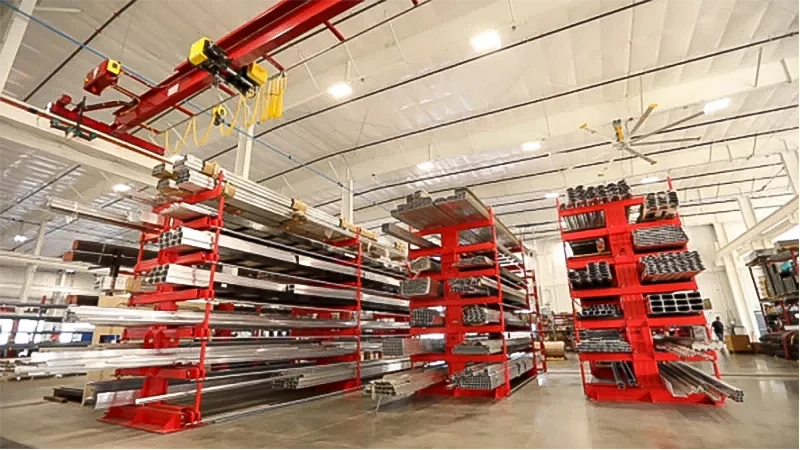
This isn’t generic warehouse shelving. Every component is designed and fabricated to withstand the harsh environment of a metal processing facility.
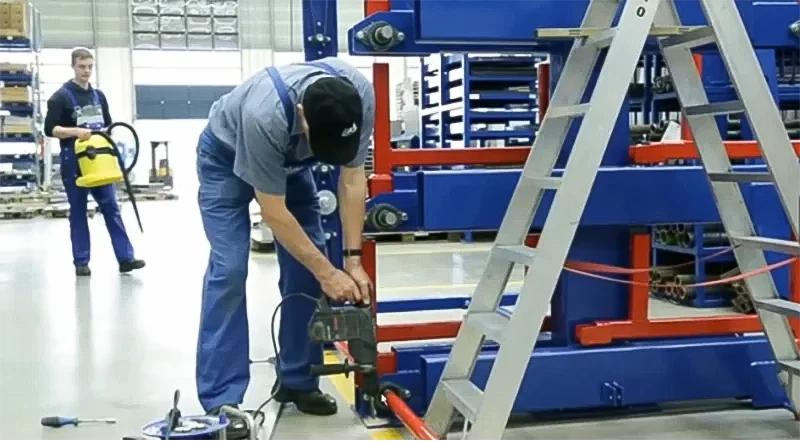
- Rock-Solid Foundation: The entire structure is built on a base of heavy-duty H-beam structural steel, providing an unshakable foundation. Once installed, it’s anchored directly to your concrete floor with expansion bolts, ensuring absolute stability even with a fully extended 10,000 lbs load.
- Industrial Powder Coating: The durable powder-coated finish resists the scratches, impacts, and exposure to oils and coolants common in any fabrication shop. This prevents rust and corrosion, guaranteeing a long, low-maintenance service life.
- Fully Customizable: We engineer the system to your exact needs. We’ll configure the height, number of levels, arm length, and load capacity to create the perfect storage solution for your specific inventory of steel pipe, tubing, bar stock, and structural profiles.
Frequently Asked Questions
Q1: How is this system different from the standard fixed cantilever racks I already have?
A: The fundamental difference is dynamic access versus static storage. Standard racks require a forklift to maneuver in an aisle to access material. A crank out cantilever rack brings the material to you. Each level extends fully, allowing direct, safe access from an overhead crane. This eliminates aisles, saves space, and is dramatically faster and safer.
Q2: What is the typical weight capacity per level?
A: Our systems are engineered for heavy-duty industrial use. Standard capacities range from 2,000 to 10,000 lbs per level (arm). We can custom-engineer solutions for even heavier applications based on your specific material requirements.
Q3: Do I need a special concrete foundation for installation?
A: The system is designed to be installed on a standard industrial reinforced concrete slab. As part of our design process, we will provide you with the exact point-loading specifications based on your chosen configuration. This allows you to verify that your floor is suitable before installation.
Q4: How does this specifically improve safety for my crew handling heavy bar stock?
A: It improves safety on three levels: 1) It eliminates the need for risky “secondary handling,” where crews move top bundles to get to bottom ones. 2) It dramatically reduces forklift traffic in the storage area, a major source of accidents. 3) The operator handles the material with an overhead crane from a safe distance, with a clear line of sight, instead of working in a confined space near a forklift.
Q5: Can I store multiple material lengths, like 20 ft and 40 ft bundles, in the same rack system?
A: Absolutely. The system is modular. We design the layout of the vertical columns based on the longest material you need to store. Shorter materials can easily be stored in the same system. We can also provide optional dividers on the arms to help segregate smaller batches or different SKUs on the same level.
Need a Custom Storage Solution?
Speak directly with our technical engineers. We offer free structural designs, heavy-duty catalog evaluations, and quick B2B price quotations.
Request a Quote Now →