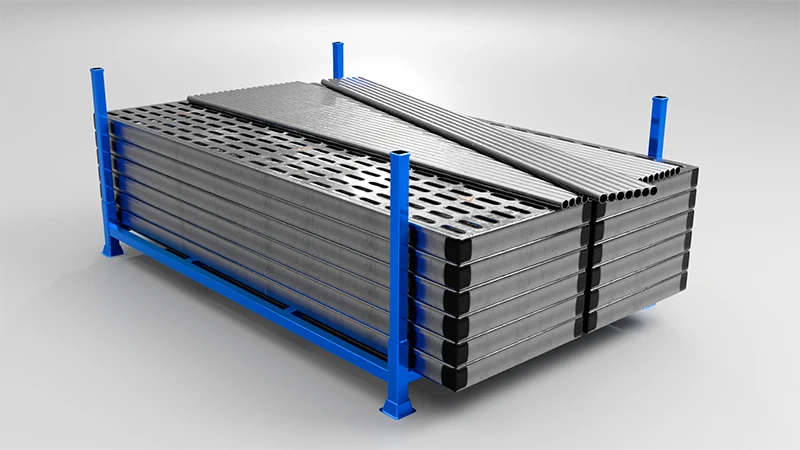

In high-velocity logistics, the cross-docking floor is where profits are made or lost. Traditional floor-stacking creates bottlenecks, risks product damage, and limits throughput. Discover how a simple shift in equipment can transform your staging area from a point of congestion into a streamlined, high-efficiency transit hub.
The Core Challenge of Cross-Docking: The Congested Staging Area
Cross-docking operations are built on speed. The goal is to minimize, or even eliminate, storage time by moving inbound goods directly to outbound trailers. However, the reality is often a chaotic staging area. When inbound trucks arrive faster than outbound trucks can depart, goods are temporarily placed on the floor. For products like bagged animal feeds, flour, or boxed consumer goods, this presents immediate problems. Floor stacking leads to double-handling, potential contamination from the floor, and significant compression damage to lower layers. This temporary “storage” becomes the primary bottleneck, slowing down the entire logistics turnover and eroding efficiency.
How Stack Racks Transform the Cross-Docking Workflow
Instead of viewing the staging area as a flat floor, portable stack racks introduce a modular, vertical, and mobile framework. These are not permanent shelving units but rather “pallets with their own skeleton.” This fundamental change in approach fundamentally redesigns the cross-docking process, solving its core challenges directly.
From Floor Chaos to Vertical Order: The Instant Staging Unit
When an inbound shipment arrives, pallets of goods are loaded directly into a stack rack. Immediately, that unit load is protected by a steel frame and is ready to be stacked. A forklift can safely place another loaded rack on top, up to 4 or 5 levels high. This action converts unused vertical airspace into a structured, temporary holding area. The need for sprawling floor space vanishes, decluttering the dock and creating clear, safe pathways for traffic. Each stack becomes a neat, self-contained tower of a specific SKU, ready for its designated outbound truck.

Eliminating Double-Handling: The Unitized Load Advantage
With pallet stillages, the goods are handled only once at the dock: when they are moved from the inbound truck into the rack. From that point on, the entire rack—containing a ton or more of product—is the unit of movement. When the outbound trailer is ready, a forklift picks the entire rack and loads it. This eliminates the time-consuming and labor-intensive process of re-handling individual pallets or cases. The workflow changes from “unload pallet, move pallet, stage pallet, pick pallet, load pallet” to a simple “unload unit, load unit.” This drastically accelerates throughput and reduces labor costs.
Creating a Dynamic Buffer Zone: Flexibility on Demand
Logistics are unpredictable. An outbound truck might be delayed by traffic, or an inbound shipment may arrive early. In a traditional setup, this causes a complete shutdown of the staging area. With a portable rack system, the staging area becomes a dynamic buffer. If a delay occurs, the loaded racks can simply be stacked higher or moved to a temporary holding zone without disrupting the flow of other shipments. The warehouse layout is no longer fixed; it adapts in real-time to the demands of the supply chain. This “liquid warehouse” concept is the key to maintaining velocity in an imperfect world.
Tangible Operational Gains in a Cross-Docking Environment
The transition from a floor-based operation to a rack-based system delivers clear, measurable improvements in the key performance indicators for any cross-docking facility. The changes are not incremental; they represent a complete transformation of the material handling process.
| Metric | Before (Traditional Floor Staging) | After (Using Portable Stack Racks) |
| Dock Turnaround Time | High. Dependent on manual sorting, staging space availability, and re-handling. | Reduced by up to 80%. Forklifts move entire unit loads, minimizing dwell time. |
| Product Damage Rate | High risk of compression damage, contamination, and impact from traffic. | Near-zero. Steel frame bears all weight, protecting goods from crushing and impact. |
| Space Utilization | Poor. Limited to a single horizontal layer, consuming vast floor space. | Excellent. Increases capacity by 400-500% by utilizing vertical space. |
| Operational Flexibility | Rigid. A delay in one shipment can halt the entire floor operation. | Highly flexible. Racks can be moved and re-stacked to create buffer zones on demand. |
Beyond Speed: Protecting Product Integrity
For industries dealing with sensitive goods, the most significant value of a heavy duty stack rack system in cross-docking is product protection. When a pallet of bagged flour is placed in a rack, the weight of any subsequent layers is supported entirely by the steel columns of the rack, not the product itself. This principle of “structure-bearing” versus “product-bearing” stacking is revolutionary. It means that the bottom layer of goods is as safe and undamaged as the top layer. This completely eliminates losses from compression, ensuring that products reach the end customer in perfect condition, protecting both revenue and brand reputation.

In conclusion, the integration of a stack and rack system is not merely an equipment upgrade for a cross-docking facility; it is a strategic overhaul of the entire operational philosophy. It transforms the chaotic, horizontal, and damage-prone staging floor into a dynamic, vertical, and secure transit hub, directly boosting speed, capacity, and profitability.
Frequently Asked Questions
1. What is a stack rack?
A stack rack, also known as a post pallet or pallet stillage, is a steel pallet base with removable corner posts. This design allows you to stack goods in layers without the items themselves bearing any weight. The posts create a sturdy frame that supports the load above, protecting the products inside.
2. How exactly do stack racks improve cross-docking efficiency?
They improve efficiency primarily by enabling vertical stacking in the staging area, which saves floor space. More importantly, they create a unitized load that can be moved from inbound to outbound with a single forklift action, eliminating the time-consuming process of re-handling individual pallets and reducing truck turnaround times.
3. Can these racks handle different types of products?
Absolutely. They are highly versatile. While ideal for bagged goods, boxes, and tires, they can be customized with different base surfaces (steel plate, wire mesh) and accessories to handle everything from fabric rolls and pipes to automotive components, making them adaptable to virtually any cross-docking scenario.
4. Are they safe to stack and move when fully loaded?
Yes, they are engineered for safety. The posts lock securely into the base, and the top of each post features a “cup foot” or guide that allows the rack above to self-align and settle securely. This design ensures stability both during transport by forklift and when stacked multiple levels high.
5. What happens to the racks when they are not in use?
This is a key advantage for flexible operations. The posts can be detached and stored on the base. The empty bases can then be nested or stacked together, reducing their storage footprint by up to 80%. This makes it easy to clear floor space for other tasks or to ship them back efficiently in a return logistics loop.
Need a Custom Storage Solution?
Speak directly with our technical engineers. We offer free structural designs, heavy-duty catalog evaluations, and quick B2B price quotations.
Request a Quote Now →