In high-throughput warehouses, every second counts. Superior logistics equipment must not only fulfill its basic function but also be designed with full consideration for operator convenience and efficiency. This case study shares how we significantly improved a major US distributor's forklift operational efficiency and safety through a seemingly minor but crucial design detail: customizing a non-standard 100mm nesting gap for their empty portable stacking pallet racks.
The Challenge: Optimizing Forklift Operations While Meeting Storage Needs
The client required an inverted stacking rack system to store palletized goods with a height of 1800mm and achieve a two-tier stack. However, beyond these basic needs, the client, based on their extensive on-site operational experience, made a very specific request.
The Core Pain Point
The client found that with standard stacking racks, the gap between nested empty units was too small. This made it difficult for forklift operators to accurately and quickly insert the forks to pick up a stack of empty racks, often resulting in collisions that reduced efficiency and increased equipment wear and tear.
The Specific Requirement
The client explicitly demanded a vertical clearance of exactly 100mm between two nested empty racks to perfectly accommodate the thickness of their forklift tines and suit their operating habits.
Our Engineered Solution: Designed for the Operator
We understand that true efficiency comes from respecting operational details. Therefore, the core of our design philosophy is not just to "store goods," but to "serve people."
1. A Frame Tailored to the Load
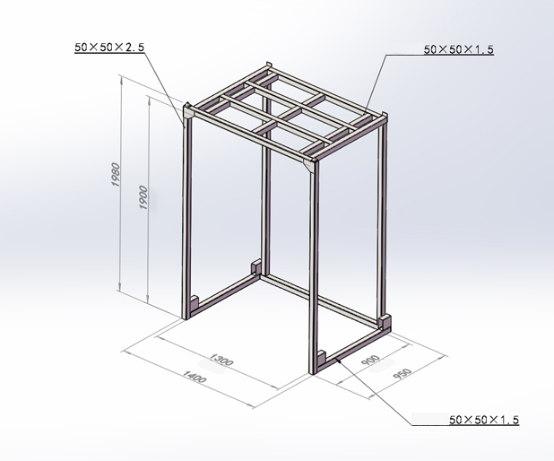
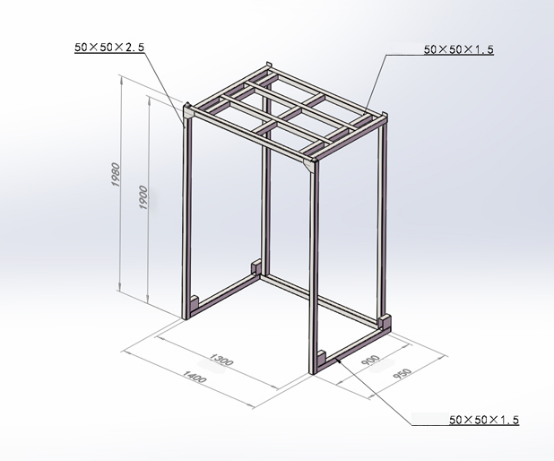
We first designed an inverted stacking rack with internal dimensions of 1300×900×1900mm based on the client's 1200x800x1800mm unit load, ensuring safety and convenience for goods access.
2. The 100mm Gap: A Precise Adjustment for Efficiency
This was the masterstroke of the entire solution. To achieve the client-specified 100mm gap, our engineers recalculated and redesigned the height and structure of the rack's bottom support tubes. This crucial adjustment makes our portable stacking pallet racks a leader in user-centric design.
Design Detail: We precisely adjusted the height and shape of the bottom support tubes. While subtle, this change ensures that when one empty rack is nested onto another, the vertical clearance between them is exactly 100mm.
The Value Delivered:
- Increased Efficiency: Forklift operators can now confidently insert the forks quickly and smoothly in a single attempt, significantly reducing the time it takes to handle stacks of empty racks.
- Reduced Wear and Tear: It prevents equipment damage and coating abrasion caused by collisions between the forks and the rack frame, extending the service life of the racks.
- Enhanced Operational Safety: The precise gap reduces the likelihood of mishandling and minimizes the risk of destabilizing the stack of empty racks due to collisions.


3. Optimized for Transport
In addition to product design, we also optimized the shipping plan for the client. By using a unique diagonal stacking method, we were able to fit 52 racks into a single 40-foot container, maximizing space utilization and reducing per-unit transport costs.

Conclusion: Excellence is in the Details
This case perfectly illustrates our design philosophy: excellent engineering is not just about macroscopic load-bearing and structure, but also about a deep understanding of and precise fulfillment of every detail in the user's operational workflow. A 100mm gap, seemingly insignificant, directly translates into a significant improvement in the client's daily operational efficiency and safety.
Is your current equipment creating operational bottlenecks? Contact us to design a solution that perfectly fits your workflow.
Need a Custom Storage Solution?
Speak directly with our technical engineers. We offer free structural designs, heavy-duty catalog evaluations, and quick B2B price quotations.
Request a Quote Now →