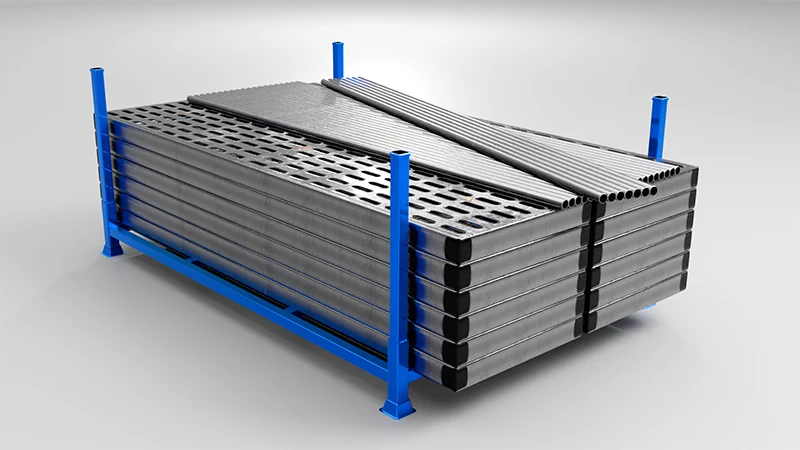

Cold storage presents one of the most demanding environments for any warehouse equipment. The constant moisture, sub-zero temperatures, and stringent hygiene regulations can quickly degrade standard storage systems, leading to rust, product contamination, and operational inefficiencies. Discover how specialized portable stacking pallet racks are not just viable but are engineered to thrive in these challenging conditions.
The Core Challenge: Why Standard Racks Fail in Cold Environments
Operating a cold storage warehouse is a constant battle against the elements. The primary adversary is condensation—the moisture that forms when temperature differences occur. This moisture is the catalyst for the rapid failure of conventional storage solutions, creating two critical problems that directly impact your bottom line and regulatory compliance.
The Inevitable Rust of Painted Steel
Standard powder-coated or painted steel racks, while adequate for dry environments, are highly vulnerable in cold storage. The freeze-thaw cycles and persistent condensation cause the paint to chip, peel, and blister. Once the protective coating is breached, the underlying steel is exposed to moisture and oxygen, leading to rapid rust formation. This rust doesn’t just compromise the structural integrity of the rack; it flakes off, becoming a primary source of contamination for food, pharmaceutical, or other sensitive products. This poses a direct violation of hygiene standards like HACCP and GMP, risking costly product recalls and damage to your brand’s reputation.
The Hygiene Risk of Wood and Plastic
Wood pallets are entirely unsuitable for cold storage. They absorb moisture, becoming a breeding ground for mold, mildew, and bacteria. In freezing temperatures, the trapped moisture expands, causing the wood to crack and splinter, creating physical contamination hazards. While plastic pallets solve the moisture problem, they can become brittle and crack under heavy loads in deep-freeze conditions, leading to sudden and dangerous failures.

Engineered for the Cold: The Hot-Dip Galvanized Advantage
The solution for cold storage lies not in a temporary coating but in a metallurgical transformation. Portable stacking pallet racks constructed from Q235 steel and treated with hot-dip galvanization are specifically designed to overcome the challenges of cold and wet environments.
A Lifelong Barrier Against Corrosion
Hot-dip galvanization is a process where the entire steel rack is submerged in a bath of molten zinc. This creates a series of zinc-iron alloy layers, metallurgically bonded to the steel, with a pure zinc layer on top. This treatment provides two levels of protection:
- Barrier Protection: A thick, durable coating (often exceeding 60μm) completely seals the steel from the environment.
- Sacrificial Protection: Even if the surface is deeply scratched by a forklift, the surrounding zinc will corrode first to protect the exposed steel. This “self-healing” property ensures a service life of 20 years or more, even in the harshest cold storage conditions.
Optimizing Airflow and Energy Efficiency
Unlike solid shelving or block-stacking on the floor, the open-frame design of pallet stillages is critical for cold chain efficiency. This structure allows cold air from refrigeration units to circulate freely and evenly around the stored products. This eliminates “hot spots,” ensures consistent product temperature, reduces the time needed to cool new inventory, and ultimately lowers the energy consumption of your cooling systems.

Beyond Durability: Unlocking Operational Flexibility
While material resilience is paramount, the “portable” nature of these racks introduces a level of operational agility that fixed racking systems cannot match.
Dynamic Layouts for Seasonal Demands
Cold storage needs are rarely static. Seasonal peaks for frozen goods, for example, require temporary increases in storage density. With portable stack racks, you can instantly reconfigure your warehouse layout. Stack them 4-5 units high to maximize vertical space during busy periods. During slower months, the posts can be removed, and the bases nested together, freeing up valuable floor space for other operations like cross-docking or order fulfillment. You create storage capacity exactly when and where you need it, without the permanence of bolted-down systems.
Safe and Efficient Material Handling
The design of these racks inherently improves safety and handling speed. The weight of stacked units is borne by the steel corner posts, not the product below, preventing crushing damage to sensitive goods. Furthermore, features like cone-shaped “cup feet” guide the racks into a stable, self-aligned stack, allowing forklift operators to work more quickly and safely, even in the challenging conditions of a cold storage facility.
Conclusion: The Definitive Answer is Yes
Portable stacking pallet racks are not only suitable for cold storage warehouses; they are the superior choice. By selecting hot-dip galvanized units, operators gain a solution that directly combats rust and contamination, enhances thermal efficiency, and provides unmatched layout flexibility. It is a long-term investment in operational resilience, food safety compliance, and a lower total cost of ownership, ensuring your facility is equipped to handle the rigorous demands of the modern cold chain.
Frequently Asked Questions
1. Why is hot-dip galvanizing better than stainless steel for cold storage racks?
While stainless steel is corrosion-resistant, it is often significantly more expensive. Hot-dip galvanization provides a comparable level of long-term corrosion protection, including self-healing properties for scratches, at a more cost-effective price point, making it the ideal balance of performance and value for large-scale warehouse applications.
2. Can these portable racks damage my insulated concrete floors?
No. The load is distributed across the four corner “feet” of the rack base. The design ensures the weight is spread evenly, preventing point-load damage that can occur with other types of storage systems. They are safe for standard reinforced concrete floors found in cold storage facilities.
3. How high can you safely stack these racks?
Most industrial-grade portable stacking racks are engineered to be safely stacked 4 to 5 units high, depending on the load capacity and the specific model. This allows warehouses to fully utilize their vertical clearance, often up to 6-8 meters, dramatically increasing storage density compared to floor stacking.
4. Are these racks difficult to clean and sanitize?
On the contrary, their open design and smooth galvanized surface make them exceptionally easy to clean. They can be washed down with high-pressure water or steam cleaners to meet the most stringent food-grade and pharmaceutical hygiene standards, as there are no hidden cavities for bacteria to accumulate.
5. What happens when the racks are not in use?
This is a key advantage. The corner posts are removable. Once removed, the empty bases can be nested or stacked together in a very dense block. This means a stack of 5 or 6 empty, collapsed racks can occupy the same footprint as a single assembled rack, freeing up significant floor space during off-peak seasons.
Need a Custom Storage Solution?
Speak directly with our technical engineers. We offer free structural designs, heavy-duty catalog evaluations, and quick B2B price quotations.
Request a Quote Now →