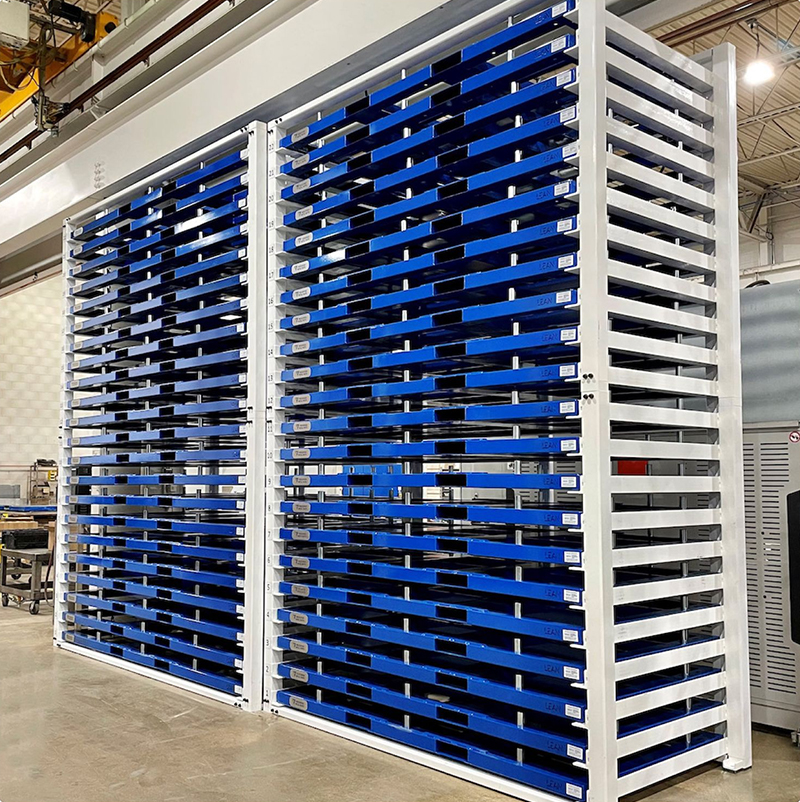
1. Inefficient Storage Methods Leading to Space Waste
Pain Point: Traditional vertical stacking of metal sheets or random placement consumes valuable floor space, complicates retrieval, and increases labor costs. A U.S.-based metal fabricator reported, “Our warehouse felt cramped despite ample square footage due to poor stacking practices.”
Solutions:
● Adopt drawer racks for sheets: Designed to store metal sheets horizontally, these systems maximize space utilization while enabling easy access. For example, modular drawer-style racks allow operators to retrieve materials without disturbing adjacent stacks15.
● Implement adjustable shelving: Customize shelf heights and widths to accommodate varying sheet sizes, reducing wasted vertical gaps.
● Modular storage integration: Systems like vertical roll-out racks enable 3D organization of residual materials (e.g., stainless steel or copper sheets), minimizing clutter near cutting machines5.
Result: One construction firm saved 20% of warehouse space by switching to horizontal storage racks
2. Rigid Rack Structures Limiting Flexibility
Pain Point: Fixed shelving struggles to adapt to diverse materials. A manufacturing warehouse manager noted, “Our single-tier racks couldn’t handle oversized tools or thin metal plates efficiently.”
Solutions:
● Invest in durable metal storage racks: Heavy-duty, multi-tier systems with reinforced frames support varied loads, from sheet metal to machinery parts6.
● Modular drawer systems: Units with swivel-mounted attachments or crane pillars allow seamless integration with forklifts, streamlining heavy sheet handling15.
● Vertical lift modules (VLMs): Automated towers with elevator systems, like the Steel Tower, store bars, plates, and sheets in high-density configurations7.
3. Poor Warehouse Layouts Hampering Accessibility
Pain Point: Chaotic zone leads to time wasted searching for materials. “We frequently lost hours locating items in our unmarked aisles,” shared a logistics supervisor.
Solutions:
● Zone optimization: Segment warehouses into dedicated areas (e.g., raw materials, finished goods) based on usage frequency. Place high-turnover items near dispatch zones.
● Aisle redesign: Ensure pathways accommodate forklifts or automated guided vehicles (AGVs). For example, compact drawer racks for sheets can be installed in narrow aisles without sacrificing accessibility5.
● Smart labeling: Use color-coded or RFID-tagged zones to accelerate navigation.
4. Manual Inventory Tracking Causing Errors
Pain Point: Spreadsheet-based tracking often results in overstocking or stockouts. “We’d discover surplus materials buried under piles, while urgent orders went unfulfilled,” admitted a warehouse supervisor.
Solutions:
● Deploy WMS platforms: Real-time tracking via warehouse management systems (WMS) syncs inventory data across teams.
● Barcode integration: Scan QR codes on durable metal storage racks to update stock levels instantly.
● Automated audits: Schedule monthly cycle counts paired with analytics to identify trends (e.g., seasonal demand for sheet metal).
5. Over-Reliance on Labor-Intensive Processes
Pain Point: Manual handling of heavy sheets risks worker safety and slows throughput. A building materials supplier noted, “Moving panels manually was both slow and physically taxing.”
Solutions:
● Automate with VLMs and conveyors: Systems like Ferretto’s Steel Tower enable hands-free retrieval of metal sheets via programmable elevators7.
● Forklift-compatible racks: Opt for forklift racks with vacuum lifting devices to reduce strain during loading15.
● Streamline workflows: Combine efficient storage systems for metal sheets with batch-picking strategies to minimize redundant movements.
Need a Custom Storage Solution?
Speak directly with our technical engineers. We offer free structural designs, heavy-duty catalog evaluations, and quick B2B price quotations.
Request a Quote Now →