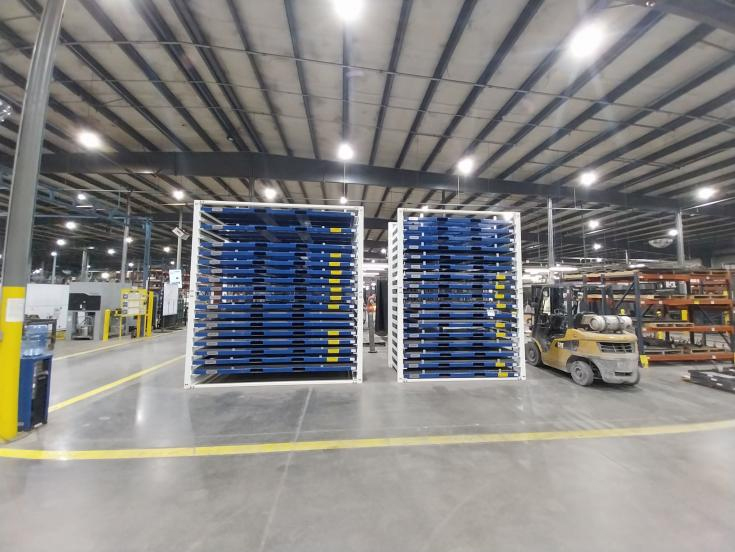
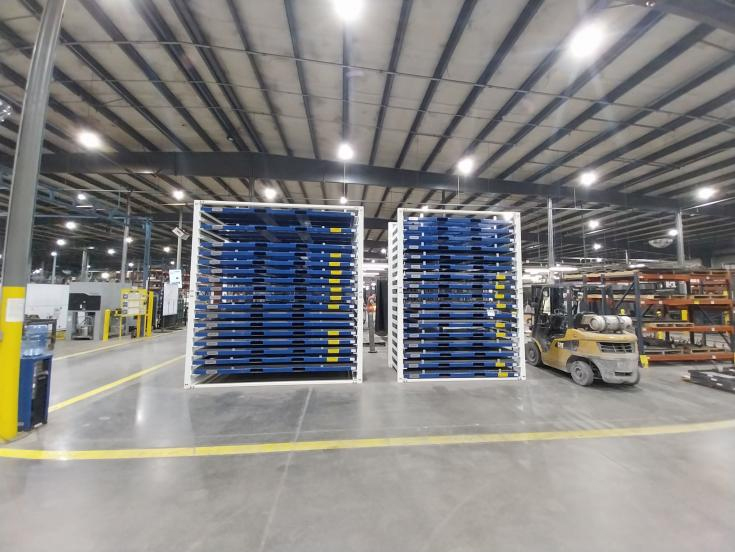
1. Optimize Storage Layouts and Stacking Methods
Pain Point: Traditional vertical stacking often leads to friction, pressure-induced warping, and edge damage.
Solutions:
● Horizontal Rack Systems: Replace vertical stacking with horizontal metal sheet storage racks. These systems distribute weight evenly, minimizing contact points and reducing friction14.
● Modular Storage Design: Categorize sheets by size, thickness, and material type. Reserve lower rack tiers for heavier plates to prevent deformation from excessive weight13.
● Support Pads and Spacers: Insert non-abrasive pads between layers to prevent surface scratches. For example, Midwest Steel Fabricators reduced edge damage by 40% after implementing rubberized spacers6.
2. Standardize Handling Protocols with Protective Measures
Pain Point: Improper handling during transport accounts for 65% of surface damage incidents.
Solutions:
● Specialized Equipment: Use vacuum lifters or clamp attachments on forklifts to secure sheets during movement. Avoid manual handling, which increases drop risks47.
● Edge Protection: Wrap sheet edges with foam or plastic guards. A case study from Texas Metalworks showed a 30% reduction in edge scratches after adopting protective films3.
● Operator Training: Conduct monthly workshops on load balancing and equipment calibration. Reinforce protocols like "no drag" policies to eliminate ground friction25.
3. Control Environmental Factors
Pain Point: Humidity and temperature fluctuations accelerate corrosion, particularly in coastal regions.
Solutions:
● Climate Monitoring: Install IoT sensors to track humidity (ideally below 60%) and temperature (18–24°C). Automated dehumidifiers and ventilation systems can maintain stable conditions13.
● Anti-Corrosion Treatments: Apply rust-inhibiting coatings or store sheets in climate-controlled zones. For example, Great Lakes Metal Storage reduced corrosion-related losses by 50% after introducing desiccant-based humidity control67.
● UV Protection: Use tinted warehouse windows or UV-blocking films to prevent polymer-based sheets from degrading under sunlight1.
4. Streamline Inventory Management
Pain Point: Frequent relocation during retrieval increases collision risks.
Solutions:
● FIFO (First-In, First-Out) Principle: Prioritize older stock to prevent long-term storage issues like oxidation. Implement barcode scanning to track expiry dates and usage cycles45.
● Smart Warehouse Systems: Integrate automated retrieval systems to minimize human intervention. A European automotive supplier reduced plate handling errors by 25% using guided vehicle systems37.
● Dedicated Access Zones: Designate retrieval lanes to avoid unnecessary movement. Label racks with weight limits and sheet dimensions for error-free operations12.
5. Proactive Maintenance and Quality Audits
Pain Point: Undetected defects during storage escalate repair costs.
Solutions:
● Scheduled Inspections: Conduct biweekly checks for surface scratches, warping, or rust. Use checklists to document issues and assign corrective actions56.
● Supplier Collaboration: Establish quality agreements with suppliers for defect replacements. For instance, Ontario Steel Suppliers introduced a 48-hour replacement guarantee for damaged shipments5.
● Preventive Repairs: Address minor corrosion spots immediately with touch-up coatings. Recycle severely damaged sheets to recover material costs67.
Need a Custom Storage Solution?
Speak directly with our technical engineers. We offer free structural designs, heavy-duty catalog evaluations, and quick B2B price quotations.
Request a Quote Now →