 |
For a supervisor, the most dangerous moment for a 2 tier cart on wheels isn't loading; it's moving. A 600 kg load on an uneven floor or a sudden stop can be disastrous. The major unaddressed risk is the *bottom shelf*, which can slide, shift, or spill, creating a significant safety hazard. |
Why Standard Carts Fail During Transport
Most 2 tier trolley on wheels designs focus only on capacity. They overlook the dynamic forces at play when the cart is in motion. A heavy bottom drawer, especially one with smooth slides, can behave unpredictably. An operator pushing a heavy load cannot simultaneously control a sliding lower drawer. This leads to items shifting, falling, or the drawer itself sliding open, potentially colliding with personnel or equipment.
The Lock-In Latch: A Simple Fix for a Critical Flaw
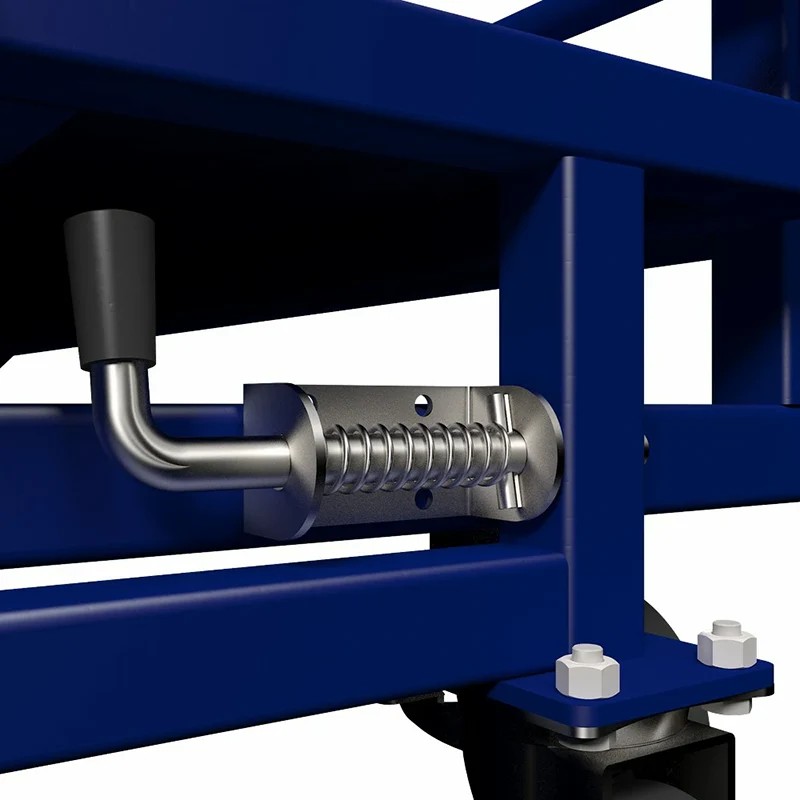
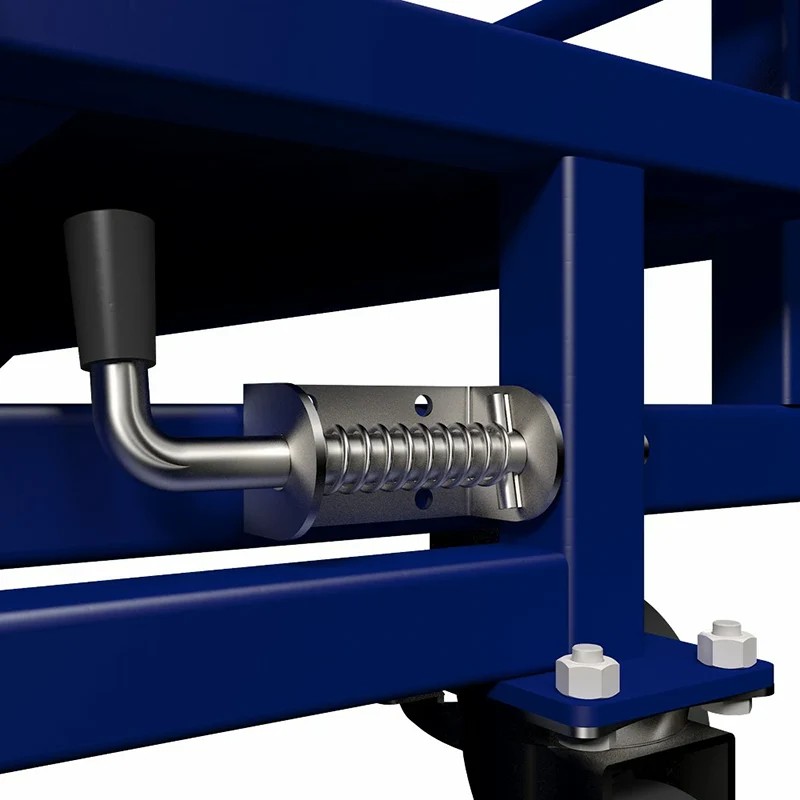
The solution is to ensure the cart becomes a single, solid unit *before* it moves. An effective pull-out cart design must include a robust locking mechanism. A heavy-duty, spring-loaded latch pin that locks the extendable shelf into the main frame is essential. This one action transforms the cart from a collection of moving parts into a stable, secure block.
The Value of a Secure Latch
This isn't a minor feature; it's a core safety component. A lining pin or latch ensures that:
- It Stays Closed: The pull-out layer is securely locked within the main frame, preventing accidental opening during movement, even on ramps or uneven surfaces.
- It Prevents Spills: The lock stops the lower shelf from jerking open during a sudden stop, keeping valuable parts or inventory contained.
- It Inspires Confidence: The operator can focus on safely navigating the load, knowing the cart is secure and will not behave erratically.
What This Means for Your Operational Safety
Focusing on ergonomics for loading is important, but ensuring safety during transport is critical. A two tier cart with wheels that integrates a pull-out shelf for access *and* a robust latch for security addresses the full operational cycle. This design minimizes risk, protects inventory from damage, and prevents workplace accidents. It's a key part of building a safer, more efficient material handling process.
Frequently Asked Questions
Q: How does the pull-out shelf stay closed when the cart is moving?
A: It is secured by a heavy-duty, internal lining pin (latch). Before moving, the operator engages the pin, which locks the pull-out layer directly to the main cart frame, preventing any sliding.
Q: Is the latch pin easy to use?
A: Yes, it is designed for simple, one-handed operation, often as a spring-loaded pin that snaps securely into place.
Q: What happens if an operator forgets to engage the lock?
A: While the V-wheel and rail system provides some friction, an unlocked drawer could potentially slide open on an incline or during a sudden stop. Proper operational procedure, which is simple to teach, is to always engage the lock before transport.
Q: Does the lock mechanism get in the way or snag on items?
A: No. A well-designed "lining pin" is internal or flush-mounted, meaning it does not protrude from the cart's frame, protecting both personnel and cargo from snags.
Q: Why not just use a standard cart with fixed shelves?
A: A standard cart creates significant ergonomic problems and part damage during loading (as discussed previously). This design solves *both* problems: easy, ergonomic loading when stationary, and secure, locked transport when moving.
Need a Custom Storage Solution?
Speak directly with our technical engineers. We offer free structural designs, heavy-duty catalog evaluations, and quick B2B price quotations.
Request a Quote Now →