
While many search for foldable trolleys to save floor space, the real bottleneck in high-SKU environments isn’t storage—it’s inefficient access. This trolley redefines space optimization by transforming its footprint into a fully accessible, ergonomic workspace, eliminating bending and boosting picking speed. Discover a solution designed for workflow efficiency, not just compact storage.
Is This Trolley Foldable? A Look at Space Optimization in Industrial Environments
To answer the question directly: No, this industrial-grade 2 tier utility cart is not designed to be foldable. Its construction from fully welded Q235 carbon structural steel is engineered for maximum rigidity and a substantial 600 kg load capacity. Introducing folding mechanisms would inherently compromise the structural integrity required for demanding industrial applications in workshops and warehouses.
When stationary, the trolley occupies a fixed footprint of 1275 mm in length by 720 mm in width. However, the more critical question for logistics and operations managers isn’t about its storage footprint, but about how it optimizes the *operational* space around it. The true innovation lies not in its ability to shrink for storage, but in its capacity to expand accessibility during use, solving a far more costly problem: the inefficiency and ergonomic risk of standard double-deck trolleys.
The True Cost of Space: The “Geometric Blind Spot” of Standard Trolleys
Conventional two-tier trolleys create a significant operational challenge. While the top shelf sits within an ergonomic “golden zone,” the lower shelf becomes a physical “blind spot.” To access it, operators must bend deeply and reach into a dark, obstructed space. This action leads to several quantifiable problems:
- Reduced Picking Speed: Operators slow down significantly to place or retrieve items from the lower level, trying to avoid collisions and ensure correct placement.
- Increased Risk of Product Damage: When handling heavy components, like automotive parts or hardware boxes, it’s common for items to be dropped into the lower shelf, risking damage to other goods already present.
- Ergonomic Strain: The repetitive motion of deep bending and reaching with a load (trunk flexion) is a leading cause of musculoskeletal disorders and lower back pain, resulting in fatigue, decreased productivity, and potential workplace injuries.
This “wasted” operational space forces a trade-off between using the full capacity of the trolley and maintaining workflow speed and operator health.

A Smarter Solution: Transforming Footprint into a Fully Accessible Workspace
Instead of folding, the Dptrolley employs a pull-out lower deck system that completely redefines its use of space. This design transforms the static footprint into a dynamic and highly efficient work zone.
Eliminating the Blind Spot with a Pull-Out Lower Deck
The core innovation is the ability for the entire lower shelf to slide out from the main frame. This simple action fundamentally changes the operator’s interaction with the trolley. Instead of reaching horizontally into a confined space, the operator gains complete, top-down visual access to the entire lower platform. This allows for vertical placement and retrieval of goods, just as easily as with the top shelf. The result is a dramatic improvement in both speed and precision, particularly in high-SKU order picking processes where identifying and handling multiple small items is critical.
The Engineering Behind Flawless Stability
A key concern with any extendable mechanism is stability under load. This 2 tier platform trolley addresses this with a robust dual-support system. The rear of the pull-out deck is mounted on a V-wheel and angle steel rail system, a design common in heavy industrial machinery for its self-centering properties and resistance to debris. Critically, the front of the deck is equipped with two auxiliary casters. When the deck is extended, these casters engage with the floor, creating a stable six-point support structure. This prevents the entire trolley from tipping, even when the lower deck is fully loaded and extended.
From Physical Dimensions to Tangible Operational Gains
By focusing on access rather than collapsibility, this design delivers benefits that directly impact operational efficiency and workplace safety.
- Reduced Physical Strain: The need for deep bending is eliminated. Operators can load and unload the lower deck from an upright, natural posture, significantly lowering the risk of back injuries and reducing overall fatigue during a shift.
- Enhanced Picking Accuracy: With a clear, unobstructed view of the lower deck, operators can quickly read labels and place items precisely. This is invaluable in industries like industrial hardware or electronics components, where similar-looking parts must be accurately sorted.
- Protection of Goods: Vertical access prevents the “blind dropping” of items. Operators can carefully place heavy or fragile components without damaging other goods, reducing waste and improving the quality of order fulfillment.
Technical Specifications at a Glance
| Attribute | Specification |
| Overall Dimensions (L×W×H) | 1275 × 720 × 1050 mm |
| Deadweight | 66 kg |
| Frame Material | Q235 Carbon Structural Steel |
| Safe Working Load (SWL) | 600 kg |
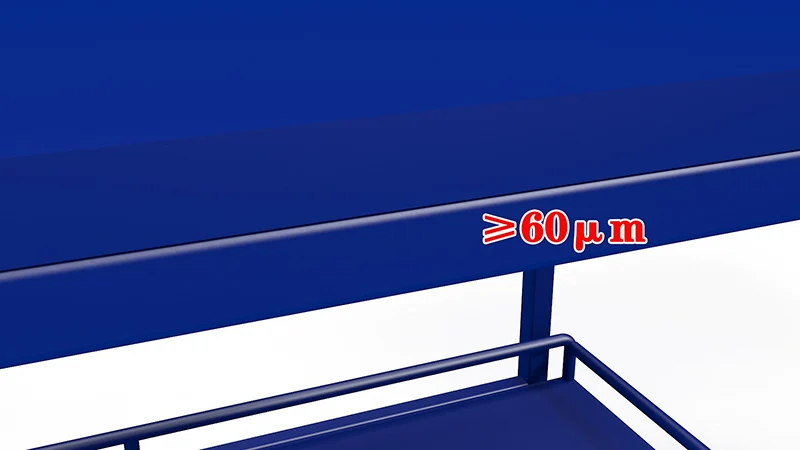
| Surface Treatment | Electrostatic Spraying (Coating thickness ≥ 60μm) |
In conclusion, while this trolley is not foldable, its design offers a more advanced form of space optimization. It converts its physical footprint into a 100% accessible, ergonomic, and efficient workspace, directly addressing the core challenges of modern order picking and material handling.
Frequently Asked Questions
1. Is this trolley foldable for storage?
No, it is not foldable. It features a rigid, fully welded steel frame designed for a high load capacity of 600 kg and long-term durability in industrial settings. Its space optimization comes from its accessible pull-out lower shelf, not from being collapsible.
2. What is the maximum load capacity of the trolley?
The total safe working load for the entire trolley is 600 kg. This capacity has been verified through ANSYS software simulation, ensuring the structure can safely handle heavy loads distributed across both the upper and lower decks.
3. How does the pull-out lower shelf remain stable when extended with heavy items?
The stability is ensured by a combination of two engineering features: a V-wheel on an angle steel rail at the rear for smooth tracking, and two auxiliary support casters at the front of the pull-out deck. These front casters make contact with the ground when the shelf is extended, creating a wide, stable base that prevents tipping.
4. What industries is this 2 tier cart best suited for?
It is ideal for any industry with high-density, high-SKU picking operations. This includes automotive aftermarket parts distribution, electronics component warehousing, industrial hardware fulfillment, and e-commerce logistics where operators handle many small-to-medium-sized items per order.
5. What material is the trolley made of and how is it protected from corrosion?
The main structure is built from Q235 carbon structural steel. To protect against rust and wear, it undergoes a multi-stage surface treatment process including acid pickling and phosphating, followed by a durable electrostatic powder coating with a thickness of at least 60μm.
Need a Custom Storage Solution?
Speak directly with our technical engineers. We offer free structural designs, heavy-duty catalog evaluations, and quick B2B price quotations.
Request a Quote Now →