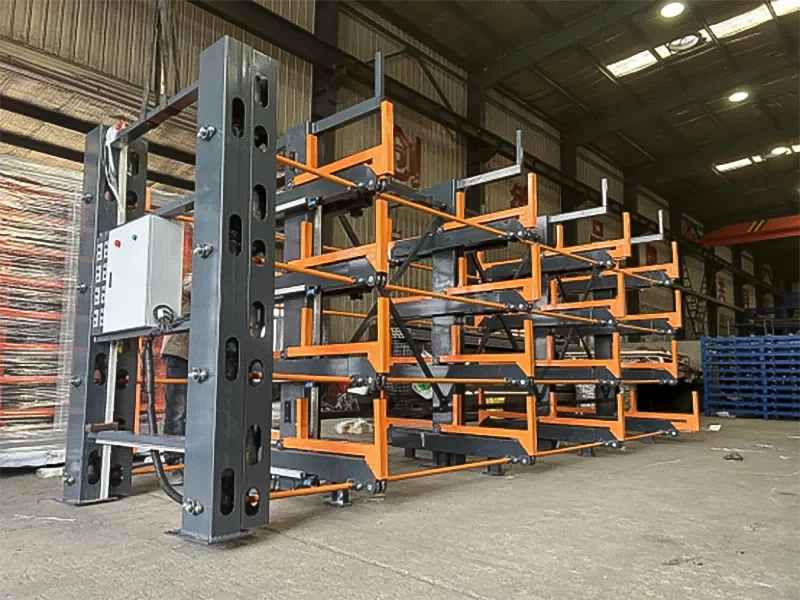
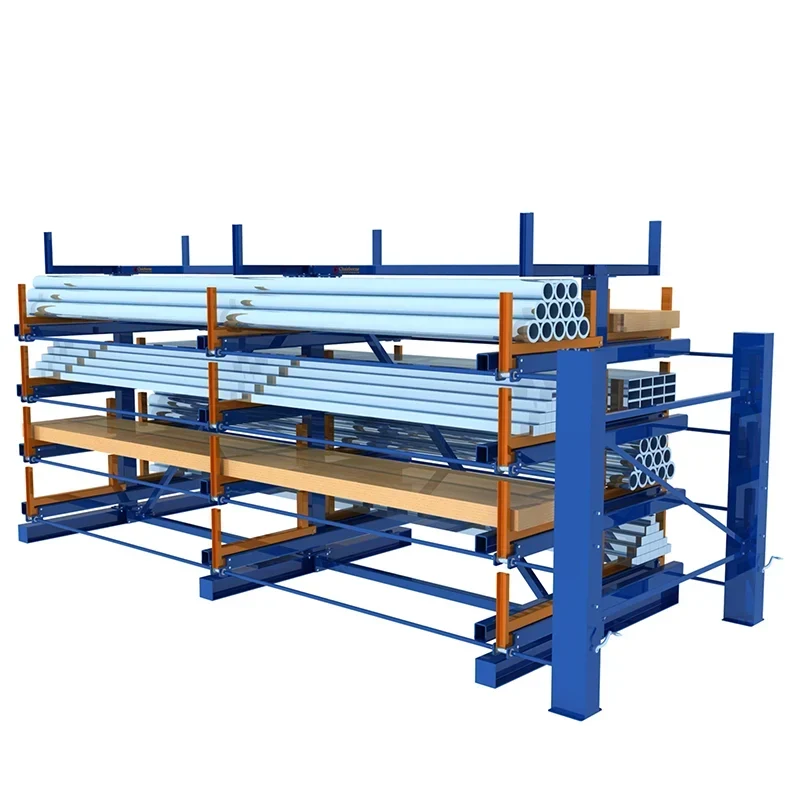
Storing heavy pipes and tubes presents daily challenges in safety and efficiency. Traditional storage methods often lead to material damage, slow retrieval times, and wasted floor space. An advanced roll-out racking system, designed for overhead crane access, directly solves these problems by providing safe, dense, and immediate access to your entire inventory.
For any facility managing heavy pipes, structural steel tubes, or high-value bar stock, the method of storage is not just a logistical detail—it’s a core component of your operational workflow. The conventional approach of using static cantilever racks or floor stacking often creates hidden bottlenecks and safety hazards that are accepted as “the cost of doing business.” However, these issues are not unavoidable; they are symptoms of a storage system that is fundamentally misaligned with modern handling equipment like overhead cranes.
The core challenge lies in accessing a specific bundle of material. When it’s buried under other stock or positioned at the back of a deep rack, the simple act of retrieval becomes a complex, multi-step operation. This process introduces significant risks and inefficiencies that directly impact your productivity and bottom line. A modern approach reimagines this interaction, focusing on bringing the material to the operator and crane, rather than forcing equipment into a confined space.
The Real-World Problems of Static Pipe Storage
Before exploring a better method, it’s critical to understand the tangible, daily frustrations caused by outdated storage systems. These are not abstract risks; they are concrete events that consume time, damage valuable inventory, and endanger personnel.
The “Digging Out” Delay: How Buried Stock Halts Your Workflow
In a system with static racks or floor stacks, inventory access follows a “last-in, first-out” reality. To reach a specific grade or diameter of pipe needed for a cutting machine, an operator must first use a forklift to remove the bundles blocking it. This “secondary handling” is pure non-productive time. Each blocking bundle has to be lifted, moved to a temporary staging area, and then eventually moved back. An operation that should take minutes can easily stretch to 15-25 minutes, during which an expensive piece of downstream equipment sits idle, and a skilled operator is engaged in low-value material shuffling.
Surface Damage: The Scratches and Dents That Scrap Your Inventory
The physical interaction between a forklift and your stored material is a primary source of damage. Steel forks sliding under a bundle of pipes can easily scratch protective coatings or mar the surface of sensitive materials like stainless or aluminum tubes. A minor scratch on a structural beam might be acceptable, but on a high-purity stainless steel tube for the food or pharmaceutical industry, it’s a cause for rejection. This damage often occurs during the difficult process of maneuvering long loads into or out of a tight rack bay, transforming valuable product into scrap metal before it ever reaches the production stage.
A Fundamental Shift: From Horizontal Forklift Access to Vertical Crane Access
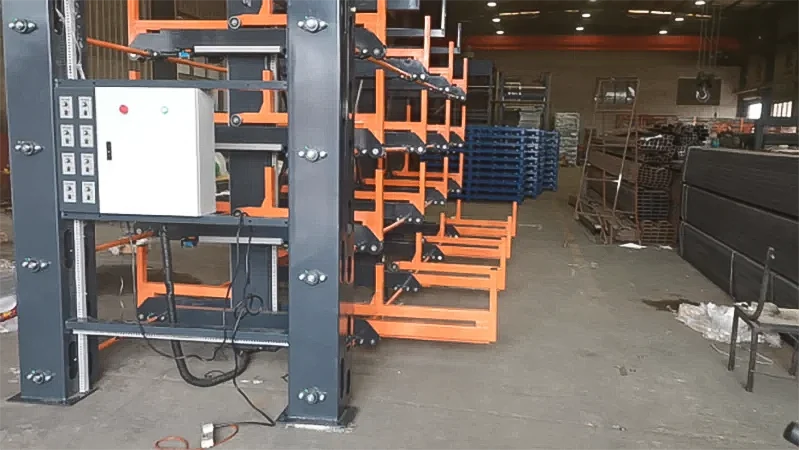
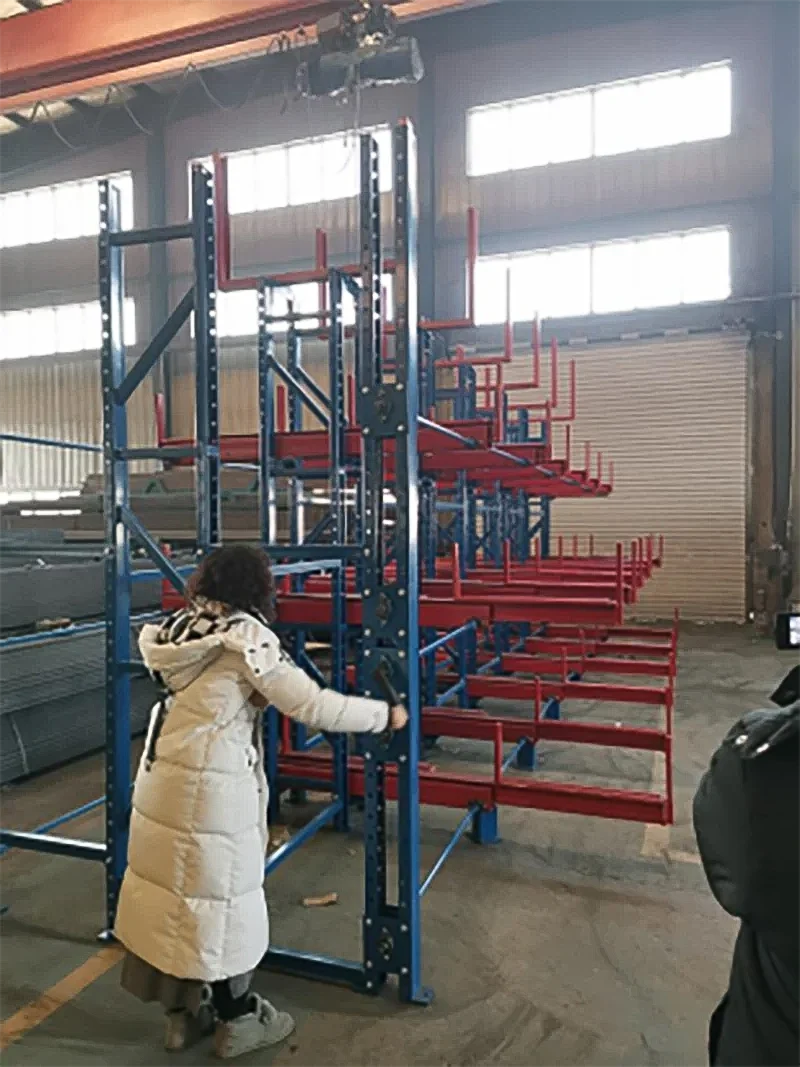
The solution is to change the fundamental dynamic of retrieval. Instead of forcing a forklift into the rack, a crank-out or roll-out cantilever rack extends the desired storage level completely out into the aisle. This single design feature enables a series of transformative operational improvements.
Achieving 100% Selectivity with Fully Extendable Arms
When a storage level can be fully extended, it presents the entire bundle of material for unrestricted access from above. This means every single pipe, tube, or bar in your inventory is immediately available. The concept of “buried” stock is eliminated. An operator simply cranks out the required level, and the material is ready for lifting. There is no need to touch any other inventory, reducing a 20-minute, multi-move task to a simple, 2-minute direct retrieval.
Integrating with Your Overhead Crane for Safer Handling
By extending the load into an open space, the system allows your existing overhead crane to do what it does best: lift heavy objects vertically. The crane can lower nylon slings, magnets, or a vacuum lifter directly onto the material. This method offers several distinct advantages:
- Damage-Free Lifting: Soft nylon slings cradle the material, eliminating the metal-on-metal contact that causes scratches and gouges.
- Enhanced Operator Safety: The crane operator can stand at a safe distance with a clear line of sight, away from the immediate lifting zone and the potential for shifting loads.
- Elimination of Aisle Congestion: The forklift is removed from the confined storage aisle, drastically reducing the risk of collisions with racking, materials, or personnel.
Comparing Daily Operations: The Practical Difference
The shift to an overhead crane-accessible system creates a stark contrast in day-to-day operations. The table below outlines the practical changes your team will experience.
| Operational Aspect | Traditional Static Racking | Extendable Roll Out Cantilever Racking |
|---|---|---|
| Access Method | Forklift maneuvers within a narrow aisle. | Level extends into open space for overhead crane access. |
| Inventory Selectivity | Limited. Must move front or top items to access rear or bottom items. | 100%. Any level is immediately and individually accessible. |
| Average Retrieval Time | 15-25 minutes (if stock is blocked). | 2-5 minutes. |
| Risk of Material Damage | High, due to sliding forks and tight maneuvering. | Minimal, due to vertical lifting with soft slings. |
| Floor Space Requirement | Requires wide aisles (4-6 meters) for forklift turning radius. | Requires minimal aisles, increasing storage density by up to 50%. |
| Operator Safety | Higher risk from forklift operation in confined spaces and potential for falling items. | Greatly improved. Operator is distanced from the load and forklift traffic is reduced. |
Ultimately, adopting a storage system designed for safe and efficient crane access is about optimizing your entire workflow. It transforms storage from a passive, problematic area of your facility into an active, streamlined component that supports production. By reducing handling time, protecting inventory, and ensuring operator safety, you can reclaim lost productivity and focus on your core manufacturing processes.
Frequently Asked Questions (FAQ)
1. What is the typical weight capacity of these extendable rack levels?
The systems are engineered for heavy-duty applications. Load capacities are designed to order but commonly range from 1,000 kg (2,200 lbs) to over 5,000 kg (11,000 lbs) per level, accommodating full bundles of steel pipe or solid bar stock.
2. Do we need a special type of overhead crane to use this system?
No, these racks are designed to integrate with most standard EOT (Electric Overhead Travel) cranes, bridge cranes, or gantry cranes already present in fabrication shops and service centers. The key requirement is having sufficient headroom above the rack.
3. Is it difficult to manually extend a level that is fully loaded with heavy pipes?
No. The manual crank mechanism is engineered with a gear reduction system that provides significant mechanical advantage. This allows a single operator to extend a level carrying several tons with minimal physical effort, typically requiring only about 20-30 kg (45-65 lbs) of force on the handle.
4. Can these racks store materials other than pipes and tubes?
Absolutely. While ideal for pipes, they are also perfectly suited for storing any long, heavy, or bulky items. Common applications include storing structural steel profiles (I-beams, channels), aluminum extrusions, lumber, and even heavy tooling or molds.
5. How does this system directly improve workplace safety?
It improves safety in two primary ways. First, it drastically reduces the need for forklift traffic in storage aisles, which are common sites for accidents. Second, it allows the crane operator to manage the lift from a safe distance with clear visibility, removing them from the immediate vicinity of a heavy, suspended load.
Need a Custom Storage Solution?
Speak directly with our technical engineers. We offer free structural designs, heavy-duty catalog evaluations, and quick B2B price quotations.
Request a Quote Now →