|
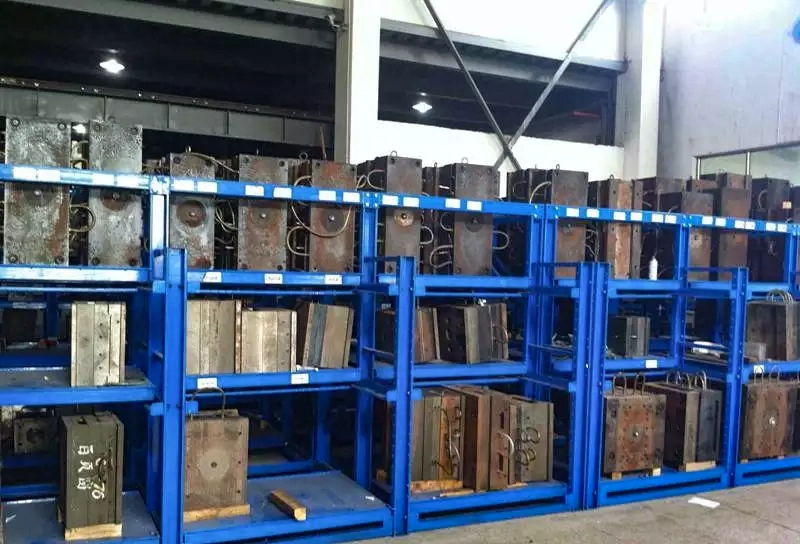
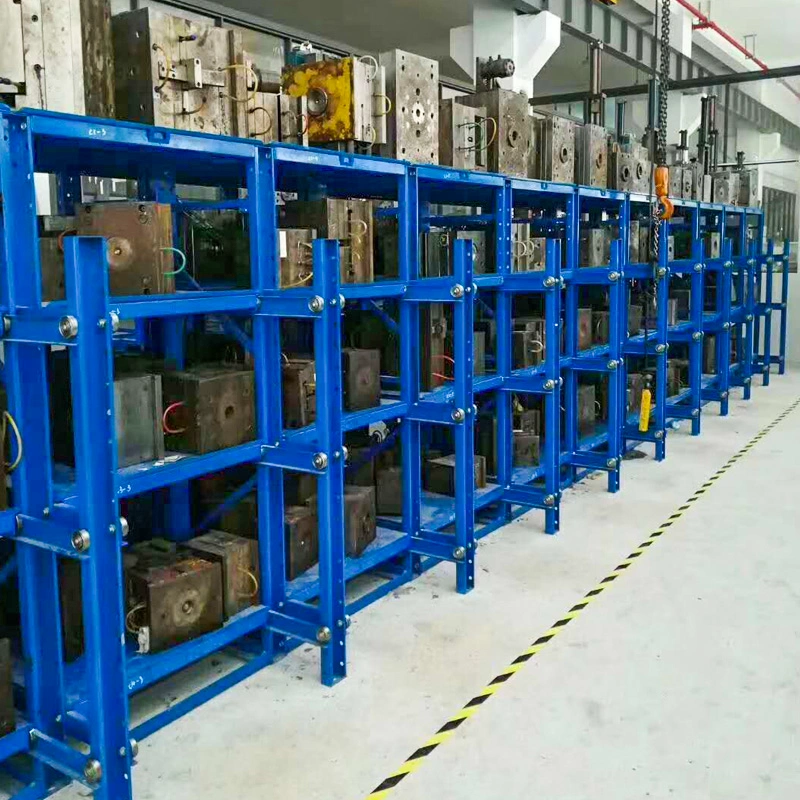
Your production floor is crowded. Expensive injection and blow molds are sitting on wooden pallets, vulnerable to forklift damage and corrosion. Every product changeover becomes a time-consuming, high-risk scramble, tying up multiple operators and killing your OEE (Overall Equipment Effectiveness). There is a more organized, safer, and vastly more profitable way to manage your tooling assets. |
The Hidden Cost of Disorganized Mold Storage in Plastics Manufacturing
In the high-volume world of plastic packaging—from PET bottles to thermoformed PP cups—speed and efficiency are everything. Yet, many facilities overlook a critical bottleneck: the mold storage area. The “it’s always been done this way” approach of storing molds on the floor or on static shelving creates a cascade of operational problems that directly impact your bottom line.
Before: The Daily Chaos of Traditional Mold Management
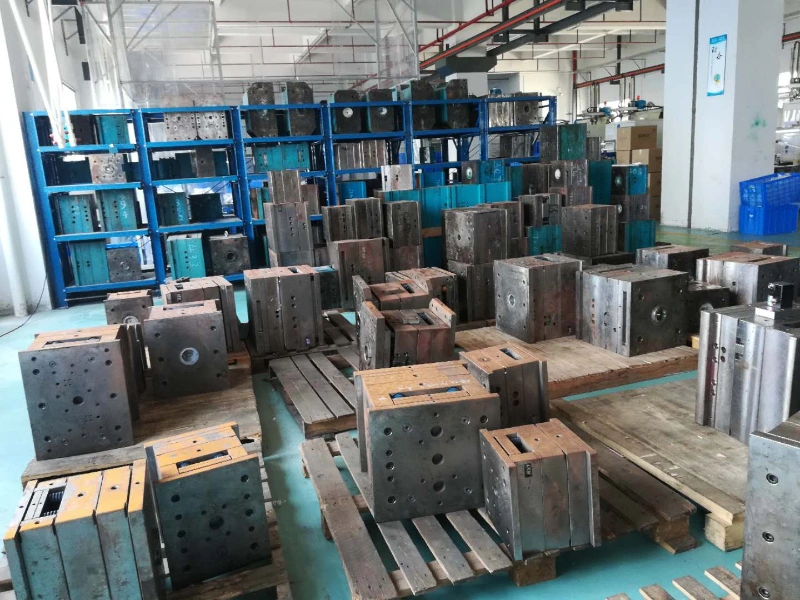
Does this scene look familiar? A Die Setter needs to perform a changeover on an injection molding machine. The required mold is buried behind two others on a pallet. A forklift operator is called, and the delicate process of maneuvering a multi-ton, high-value asset through a crowded workshop begins. This common scenario is fraught with risks:
- Asset Damage: Molds stored on the ground are susceptible to moisture, leading to rust on precision parting lines and cavities. Accidental impacts from forklifts or other equipment can cause nicks and dents, resulting in costly repairs and production of out-of-spec parts.
- Wasted Floor Space: Every square foot of your plant is valuable. Storing molds horizontally requires massive laydown areas and wide aisles for forklift access—space that could be used for another production line.
- Operator Safety Risks: Manually prying and positioning heavy molds puts immense strain on your team, leading to a high risk of back injuries and other musculoskeletal disorders. A slip during a forklift transfer can be catastrophic.
- Extended Downtime: The time spent searching for, untangling, and transporting a mold is pure, non-value-added downtime. This directly hurts your SMED (Single-Minute Exchange of Die) targets and overall plant productivity.
Engineered for Efficiency: How a Heavy Duty Mold Rack System Transforms Your Workflow
As specialist mould rack manufacturers, we focus on solving these exact problems through purposeful engineering. A professional die rack isn’t just shelving; it’s an integrated part of your production process designed for safety, density, and speed.
Why It Works: The Mechanical Advantage
The transition from floor-based chaos to vertical order is built on a foundation of robust mechanical design:
| Engineered Feature | Impact on Your Plastics Workshop |
| 100% Full-Open Drawers | Each drawer extends completely, providing unobstructed overhead crane access. Your operator can drop a hoist directly onto the mold’s center of gravity, eliminating risky side-loading and collisions. This is the key to safe, one-person retrieval. |
| Three-Pillar Structural Frame | Constructed from heavy-gauge Q235B structural steel, often using 10# channel steel, this design provides an extra support point when the drawer is fully extended. It prevents sagging and ensures stability even with a 3-ton (6,600 lbs) mold, safeguarding your most critical assets. |
| High-Precision Bearing System | We use industrial-grade bearings (e.g., Harbin 6403/6404) to convert sliding friction to rolling friction. This dramatically reduces the force needed to move a drawer. Even a 2-ton blow mold can be rolled out with minimal effort, protecting your team from strain. |
| Multi-Point Safety Locks | Every drawer is equipped with a mechanical self-locking safety pin. This physical barrier ensures a drawer cannot accidentally slide out or be pushed in during a lifting operation, creating a fail-safe environment that meets stringent OSHA standards. |
After: A Streamlined, Profitable, and Safe Production Environment
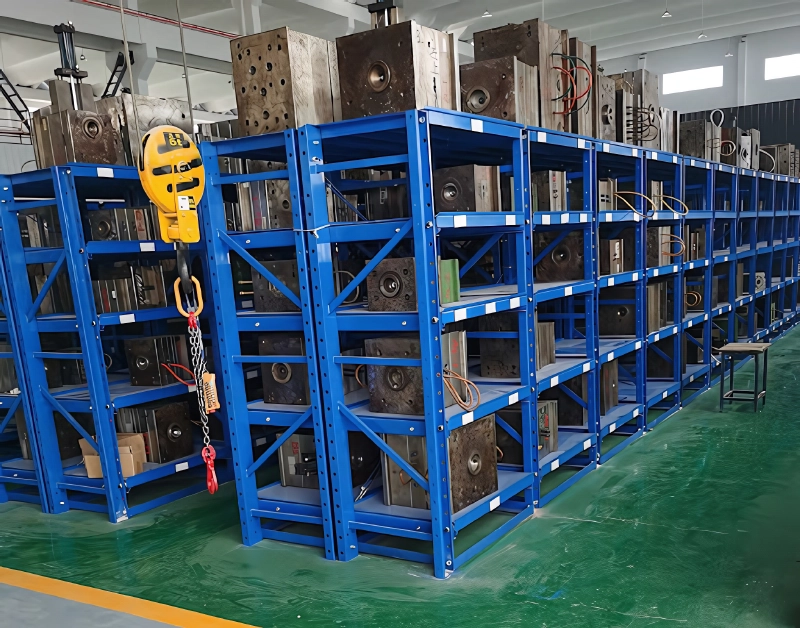
Implementing a dedicated injection mold storage solution yields immediate and measurable returns. Your tool room or production floor is transformed into a model of 5S efficiency.
- Space Utilization Increased by up to 300%: By going vertical, you can reclaim 50-80% of the floor space previously dedicated to mold storage. This opens up room for more value-adding activities, like installing another blow molding machine or creating a dedicated mold maintenance area.
- Changeover Times Slashed: Finding and retrieving a mold is no longer a search-and-rescue mission. With a designated slot and instant crane access, the mold retrieval process is reduced from 30+ minutes to less than 5.
- Mold Lifespan Extended: Our 7-step surface treatment process, including phosphating and a 60-80μm powder coating, creates a corrosion-resistant barrier. Storing molds in a clean, dry, and organized drawer type mold rack protects their precision surfaces, extending their operational life and preserving your investment.
- Enhanced Worker Safety and Morale: By engineering out the manual strain and risk, you create a safer workplace. This not only reduces the chance of costly accidents but also improves morale and shows your team you are invested in their well-being.
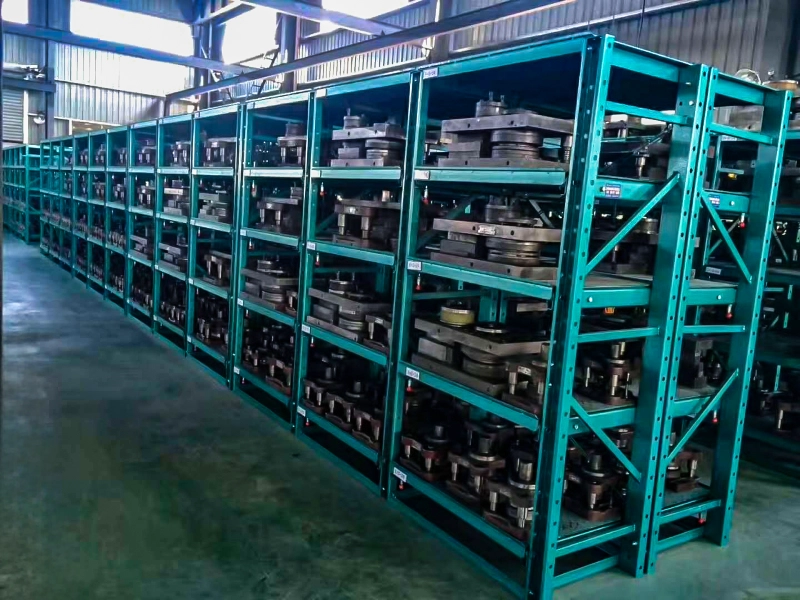
Investing in a proper system of mould storage racks is not an expense; it’s a strategic investment in uptime, safety, and capacity. Stop letting disorganized tooling dictate your production schedule and start engineering efficiency back into your workflow.
Frequently Asked Questions
1. How does this rack system handle different sizes of molds, from small PET bottle preform molds to large plastic drum molds?
Our mould rack systems are modular. The height of each drawer is adjustable, typically on 2-inch increments, allowing you to customize each level for specific mold heights. We also engineer different drawer capacities, from 1,000 lbs for smaller molds up to 6,000 lbs+ for large blow molds, ensuring each asset is stored safely and efficiently.
2. Our facility has high humidity. What prevents the racks and our molds from rusting?
We employ a comprehensive 7-step industrial surface treatment. The process begins with shot blasting to create an ideal surface profile, followed by acid washing and phosphating to inhibit rust. Finally, we apply a thick (60-80μm) layer of high-grade epoxy resin powder coating and cure it. This creates a durable, sealed finish that resists corrosion even in humid industrial environments, protecting both the rack and the expensive molds it holds.
3. Can a single Die Setter safely retrieve a 2-ton blow mold?
Absolutely. The combination of high-performance roller bearings and the 100% full-open drawer design makes this a one-person job. The operator can easily roll out the heavy mold and then use an overhead crane for the vertical lift. For extremely heavy molds (over 4,000 lbs), we can integrate a pneumatic-assist system that opens and closes the drawer with the push of a button, eliminating manual effort entirely.
4. We need to comply with OSHA. What specific safety features are built-in?
Safety is paramount in our design. Key OSHA-compliant features include: 1) Independent physical safety pins for each drawer to prevent accidental sliding. 2) A three-pillar design that provides support even when the drawer is fully extended under load. 3) Raised edges on the drawer panel to prevent a mold from shifting during movement. 4) Robust back-bracing with tensioned steel rods to ensure overall frame rigidity and prevent lateral sway.
5. How does a drawer type mold rack integrate with our existing overhead crane system?
Our racks are designed specifically for crane integration. The full-extension drawer presents the entire mold clear of the rack’s frame, allowing for a straight, vertical lift without any obstructions. This eliminates the need for complex and risky forklift maneuvers near the rack. The system allows you to reduce aisle widths from a typical 12-14 feet for forklifts down to just 4-5 feet, which is a massive space-saving advantage.
Need a Custom Storage Solution?
Speak directly with our technical engineers. We offer free structural designs, heavy-duty catalog evaluations, and quick B2B price quotations.
Request a Quote Now →