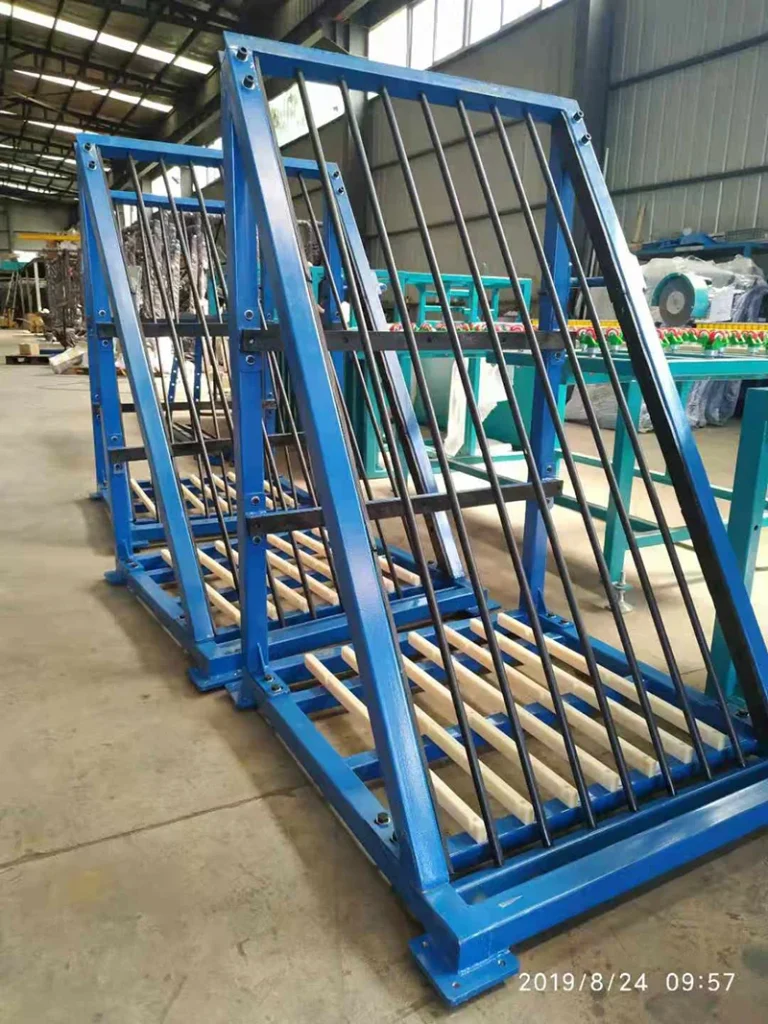
Your multi-thousand-dollar die sets are stacked on pallets, vulnerable to forklift damage and corrosion. Every minute your press sits idle during a changeover costs you money. It’s time to stop hunting for tooling and start implementing a system that protects your assets and accelerates your production workflow.
Your Tooling is Your Asset. Why is it Stored on the Floor?
In any precision manufacturing facility, from sheet metal stamping to injection molding, the tool room is the heart of the operation. Yet, it’s often the most chaotic. Expensive stamping dies, mold plates, and custom tooling are left on wooden pallets, creating a hazardous and inefficient “tooling graveyard.” This isn’t just untidy; it’s a direct drain on your profitability.
Every time a forklift bumps a pallet, you risk damaging a precision-machined A-surface, leading to costly repairs and defective parts. When an operator spends 30 minutes searching for the correct die set for the next job, your press—the most valuable machine on your floor—sits idle. This disorganized approach leads to extended changeover times, increased risk of operator injury from manual lifting, and a shortened lifespan for your critical tooling investments.

Shift from Clutter to Process: High-Density Vertical Tooling Carts
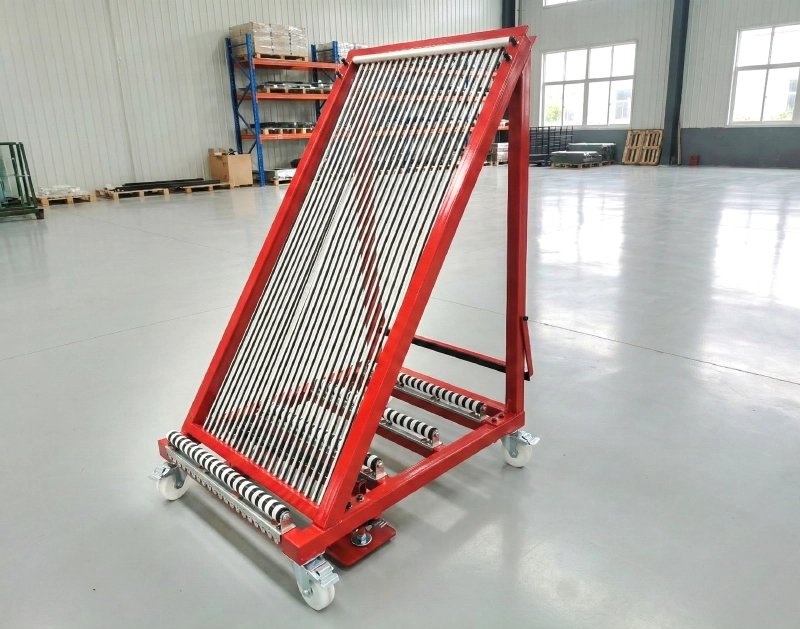
The solution is to move from static, horizontal storage to a dynamic, vertical system. Our mold storage racks are engineered not just to store, but to integrate directly into your production workflow. They function as mobile Work-in-Progress (WIP) stations for your tooling, transforming your changeover process from a scramble into a science.
The logic is simple: protect, organize, and mobilize.
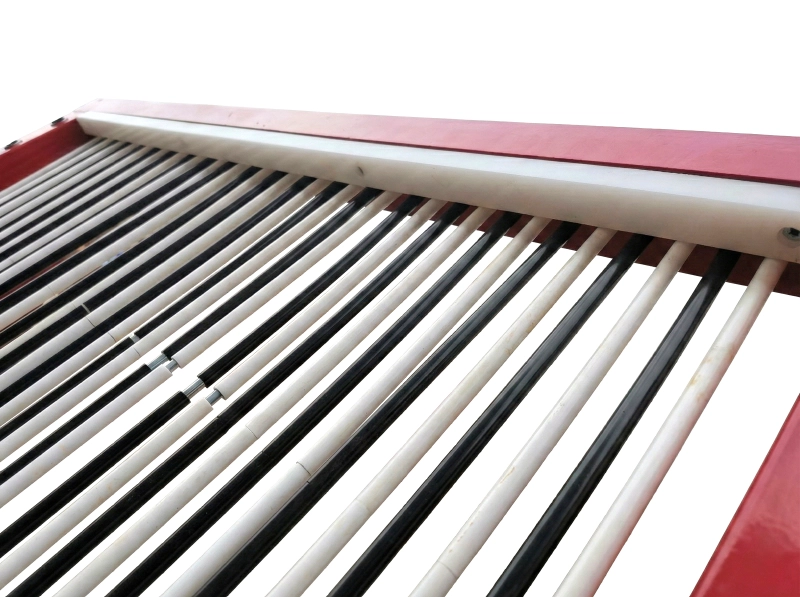
- Isolate and Protect Each Tool: The core of the design is a series of vertical dividers, each coated in a non-abrasive, resilient PVC casing. Every mold plate or die set gets its own cushioned slot, preventing the metal-on-metal contact that causes scratches, dings, and surface imperfections. This is critical for protecting polished mold surfaces and sharp die edges.
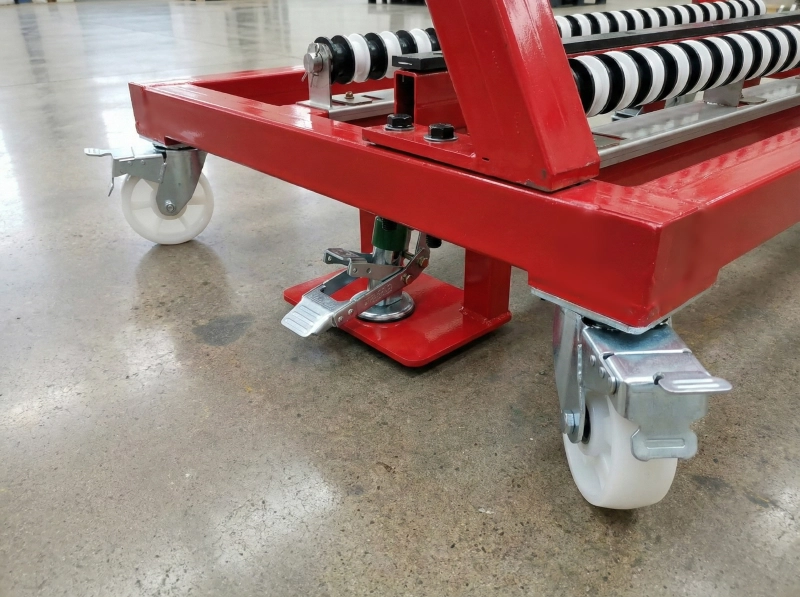
- Create a “Tooling-on-Demand” System: Equipped with heavy-duty polyurethane casters, these racks move your tooling from the storage area directly to the press or CNC machine. Pre-stage the tools for the next three jobs on a single mobile cart. When a changeover is needed, the correct tooling is already machine-side, ready to be loaded.

- Ensure Ultimate Safety During Transit: Moving heavy, unbalanced tooling is a major safety concern. Our racks feature a foot-actuated lifting and locking mechanism. Before moving, a simple press of the pedal lifts the entire load slightly and locks it securely against a fixed buffer. This completely eliminates any risk of tools sliding or shifting during transport across uneven factory floors, protecting both your assets and your team.
The Tangible Returns: Slashing Downtime and Protecting Your Investment
Implementing a systematic approach to tooling storage delivers immediate and measurable results. By reducing search time and streamlining the transport process, you directly attack the largest source of non-productive time in your facility: machine downtime during changeovers.
| Metric | Before: Pallet Storage | After: Mobile Mold Rack System |
| Tool Retrieval Time | 15-30 minutes (searching, forklift operation) | < 5 minutes (pre-staged, machine-side) |
| Risk of Tool Damage | High (contact, impact, corrosion) | Near-Zero (isolated, protected storage) |
| Floor Space Utilization | Low (large footprint per tool) | High (up to 80% space reclamation via vertical density) |
| Operator Safety | Low (manual handling, trip hazards) | High (ergonomic transport, secure locking) |
Furthermore, the knock-down, bolted assembly design offers a significant advantage for organizations with multiple facilities or those planning expansions. The ability to flat-pack the racks dramatically reduces freight costs for both domestic and international shipping, ensuring a lower total cost of ownership.

Frequently Asked Questions
1. What is the typical load capacity of these racks?
Standard models are engineered with a dynamic load capacity of 1500 kg (approx. 3300 lbs). We also offer custom heavy-duty versions with capacities exceeding 2500 kg (>5500 lbs) for larger die sets and mold bases.
2. Our tooling plates vary in thickness. Can the rack be adjusted?
Absolutely. While standard models have fixed slot widths, we specialize in customization. We can engineer the slot spacing to precisely match your tooling inventory, from thin stamping dies to thicker mold plates, ensuring a secure, no-slop fit.
3. How does the PVC coating hold up to cutting fluids and workshop grease?
The industrial-grade PVC we use is highly resistant to common machining oils, greases, and coolants. It is non-porous and easy to wipe clean, ensuring it won’t degrade or transfer contaminants to your tooling surfaces.
4. How difficult is on-site assembly?
The racks are designed for simple, intuitive assembly. Using a knock-down bolted structure, two people with standard tools can typically assemble a unit in under 30 minutes. All hardware and clear instructions are included.
5. Can these racks be handled by a forklift?
Yes. The base is designed with dedicated forklift entrances, allowing for safe and efficient movement of fully loaded racks over longer distances within your facility, complementing the manual push-cart functionality for machine-side positioning.
Need a Custom Storage Solution?
Speak directly with our technical engineers. We offer free structural designs, heavy-duty catalog evaluations, and quick B2B price quotations.
Request a Quote Now →