 |
Is your injection molding workshop floor cluttered with valuable molds on pallets? Slow changeovers, risk of mold damage, and wasted space are costing you more than just rent. An optimized mold storage rack system isn’t an expense; it’s a direct investment in production uptime and workshop safety. |
From Workshop Chaos to Streamlined Production: Solving Mold Storage in Plastic Manufacturing
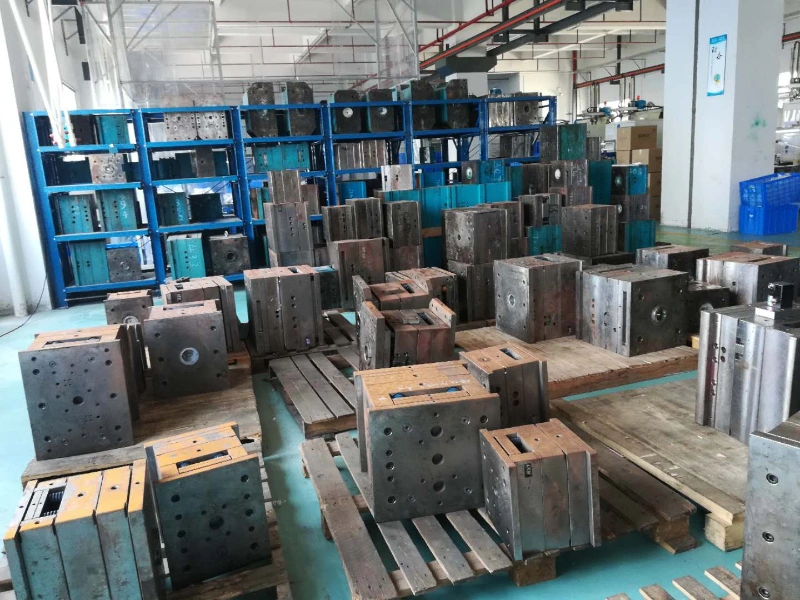
For any plant manager in the plastic packaging or injection molding industry, the workshop floor tells a story. Far too often, it’s a story of inefficiency. Expensive injection mold storage assets—worth tens of thousands of dollars each—are left on wooden pallets, exposed to moisture, accidental collisions from forklifts, and the constant risk of damage. The process of a simple mold changeover becomes a lengthy ordeal involving multiple staff, a forklift, and a significant amount of production downtime. This disorganized approach directly impacts your bottom line and creates unnecessary safety hazards for your die setters and technicians.
The Problem with Ground-Level Storage
Leaving molds on the floor or on standard pallet racking presents several critical challenges specific to plastic molding operations:
- Asset Damage: The precision surfaces of injection and blow molds are highly susceptible to rust from ground moisture and dings from passing traffic. A single collision can lead to costly repairs and production delays.
- Wasted Floor Space: Every square foot occupied by a pallet is a square foot that could house another injection molding machine. With industrial real estate costs rising, this inefficient use of vertical space is a significant hidden cost, sometimes wasting 50-80% of potential storage area.
- Inefficient Changeovers (SMED): Locating the correct mold, clearing a path, and carefully maneuvering a forklift takes time. This extends machine downtime, directly reducing your plant’s output capacity.
- Operator Safety Risks: Manually moving heavy molds with pry bars or navigating crowded aisles with a forklift increases the risk of serious injuries, impacting both your team’s well-being and your compliance with safety standards like OSHA.
Engineered for Plastic Molders: The Erack Heavy Duty Mold Rack System
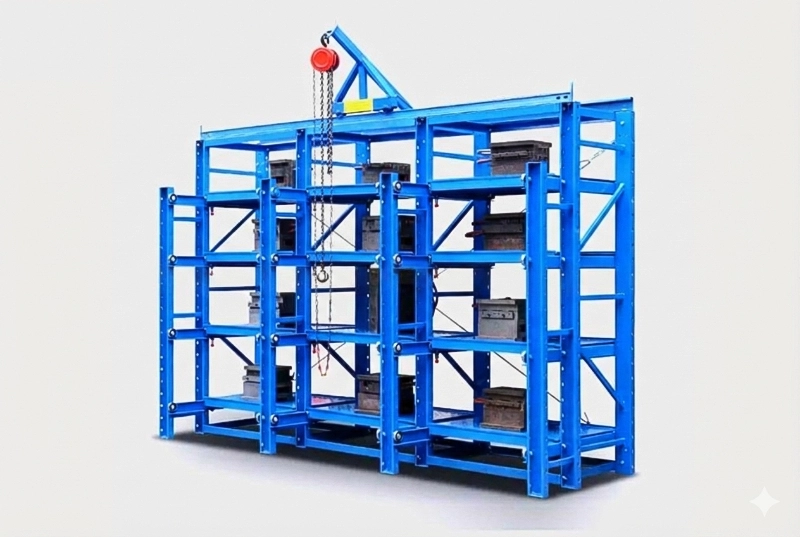
A purpose-built heavy duty mold rack is designed to systematically eliminate these problems. It’s not just shelving; it’s an integrated part of your production workflow, engineered from the ground up with the physics of heavy mold handling in mind.
1. Reclaim Your Floor Space with a High-Strength Vertical Structure
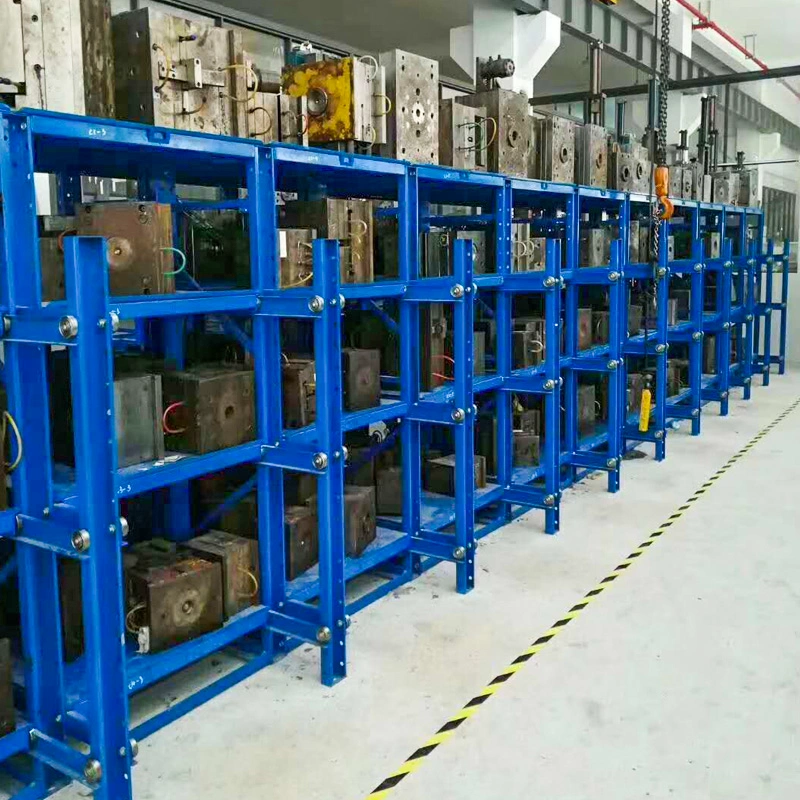
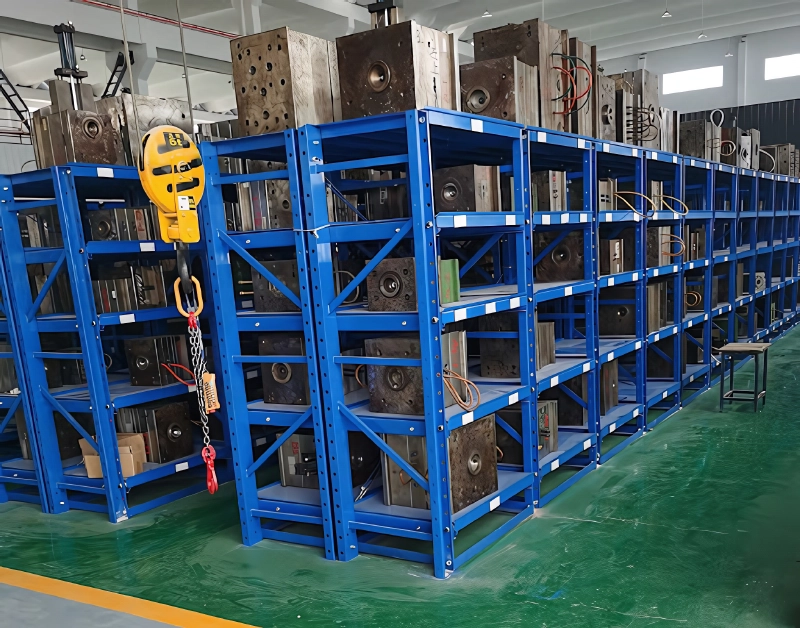
Our systems are built using high-grade Q235B structural steel, often employing robust 10# channel steel for the main columns. This high-rigidity framework is engineered to safely handle single-layer loads from 2,200 Lbs to over 6,600 Lbs. By moving your molds from the floor into a dense, vertical system, you can instantly free up valuable production space, allowing for more machinery or clearer, safer operational zones.
2. Slash Changeover Times with 100% Full Roll-Out Drawers
The core of our system is the die roll out racks design. Each drawer, equipped with high-precision Harbin bearings, can be fully extended, bringing the entire mold clear of the rack structure. This feature is a game-changer when paired with an overhead crane or hoist. Your operator can achieve direct, zero-dead-angle vertical lifting. This eliminates the need for wide forklift aisles (reducing通道 from ~13 ft to just 4 ft) and transforms a 30-minute, multi-person task into a 2-minute, single-person operation.
3. Protect Your Assets with Superior Engineering and Safety
Your molds are valuable assets that need protection. Our racks feature multiple layers of defense to ensure their longevity and your team’s safety.
- Industrial Surface Protection: A 7-step surface treatment process, including acid washing, phosphating, and a 60-80μm powder coating, creates a durable barrier against rust and corrosion, even in high-humidity environments. This protects the precision finish of your molds.
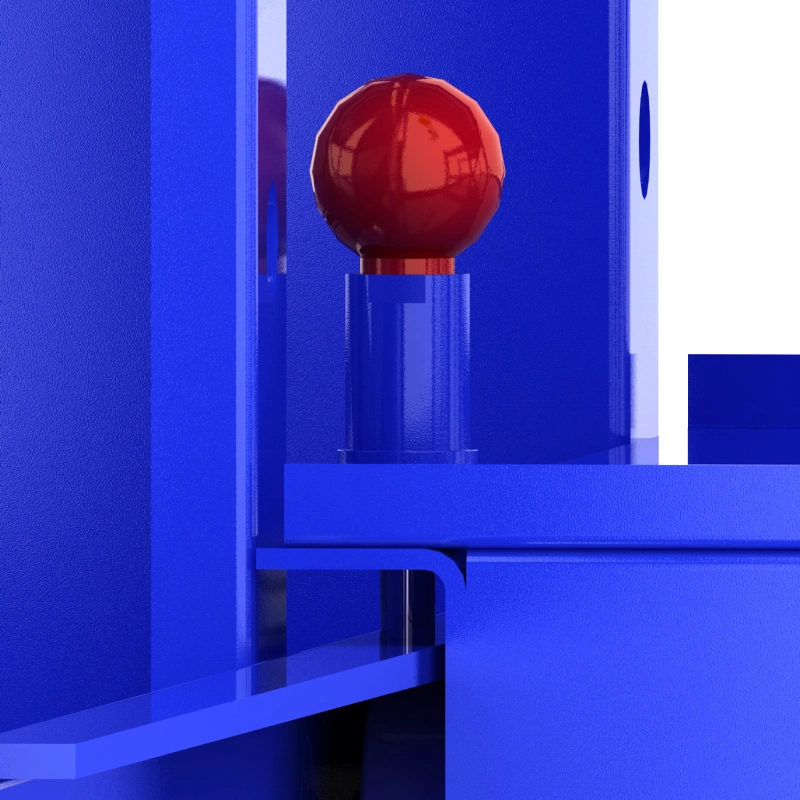
- Mechanical Safety Locks: Each drawer is fitted with a robust, physical safety pin. This self-locking mechanism ensures that a drawer cannot accidentally slide out once retracted or slip when fully extended, preventing catastrophic failures.
- Unshakable Stability: The entire structure is reinforced with solid steel cross-bracing and designed for secure anchoring to the floor, providing a stable, non-sway platform even when fully loaded.
The Result: An Organized, Efficient, and Safe Production Floor
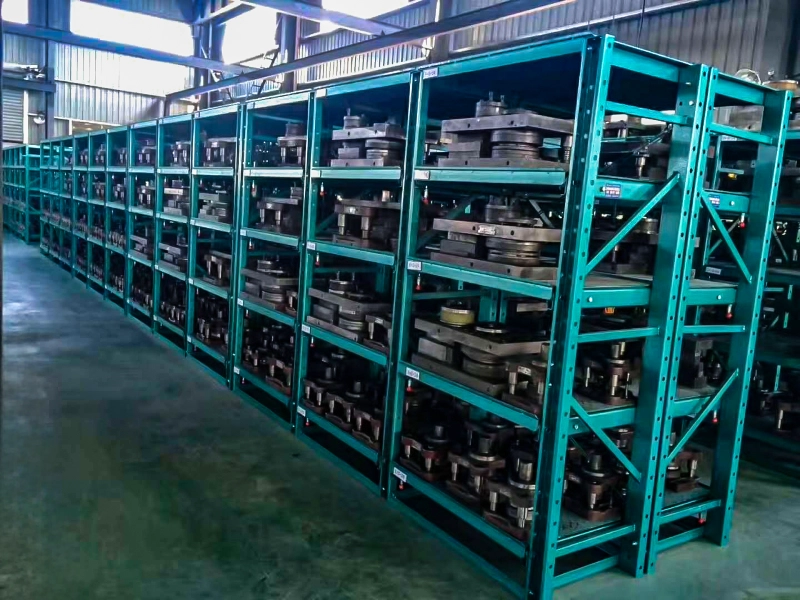
Implementing a dedicated drawer type mold rack transforms your workshop. Molds are individually stored, clearly visible, and immediately accessible. Production supervisors can implement a true 5S management system, crane operators can perform their tasks without obstruction, and plant managers can see a direct return on investment through increased production uptime and a dramatic reduction in the risk of asset damage and workplace accidents.
Frequently Asked Questions
1. What is the typical load capacity per drawer for these mold racks?
Our standard heavy-duty mold racks are engineered with a per-drawer capacity ranging from 2,200 Lbs to 6,600 Lbs (approximately 1 to 3 tons). The capacity is determined by the specific steel gauge and structural design, such as the use of 10# channel steel and reinforced drawer bottoms, to ensure zero deflection under full load.
2. How does the system work with our factory’s existing overhead crane?
The system is designed for seamless integration. The 100% full-extension drawer brings the entire mold, including its center of gravity, completely clear of the rack’s frame. This allows your overhead crane hook to descend directly for a straight, vertical lift, eliminating any need for risky angled pulls or repositioning.
3. Our mold inventory is growing. Can this storage system be expanded in the future?
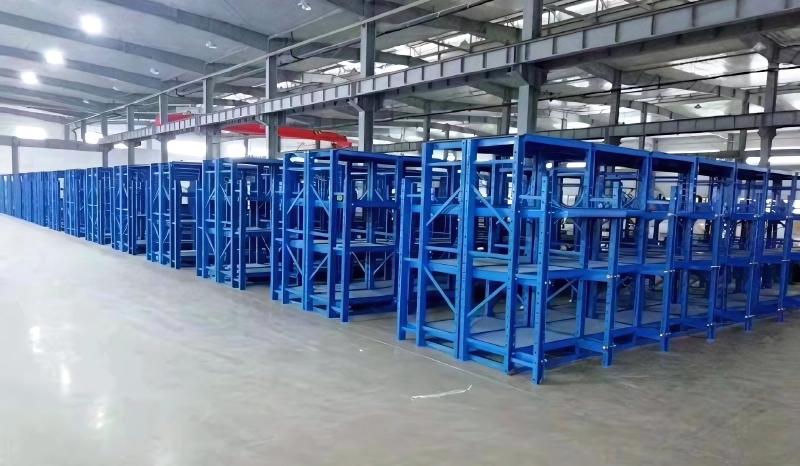
Absolutely. Our mold storage rack systems feature a modular, main-and-add-on frame design. You can start with a single unit and seamlessly connect additional “add-on” bays as your storage needs expand, creating a continuous, stable row of racking without unnecessary duplication of upright frames.
4. How difficult is it for one person to pull out a drawer carrying a 4,000 Lb mold?
It’s surprisingly easy. Each drawer is fitted with high-quality, industrial-grade bearings (e.g., Harbin 6404) that convert sliding friction into rolling friction. This reduces the required pull force to a small fraction of the mold’s weight, allowing a single operator to move it by hand. For extremely heavy molds (over 4,400 Lbs), we also offer a pneumatic-assisted drive system for effortless, push-button operation.
5. What specific safety features are included to prevent accidents during use?
Safety is paramount. Each drawer has an independent, physical safety pin that automatically locks it in the closed position to prevent drifting. A secondary manual lock secures it in the fully open position during lifting operations. Additionally, the drawers feature raised front and back lips to prevent molds from shifting, and the entire rack structure is reinforced with back-bracing to prevent any lateral sway.
Need a Custom Storage Solution?
Speak directly with our technical engineers. We offer free structural designs, heavy-duty catalog evaluations, and quick B2B price quotations.
Request a Quote Now →