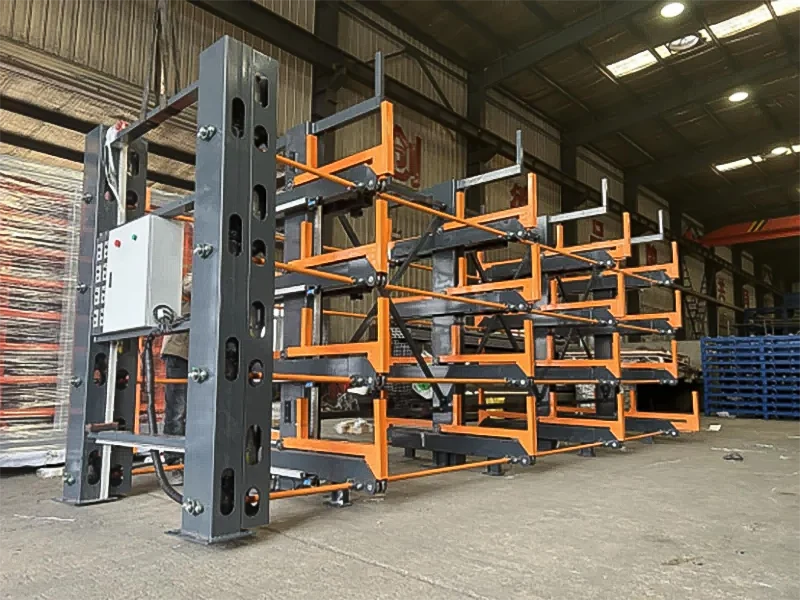
Industrial steel bar racking
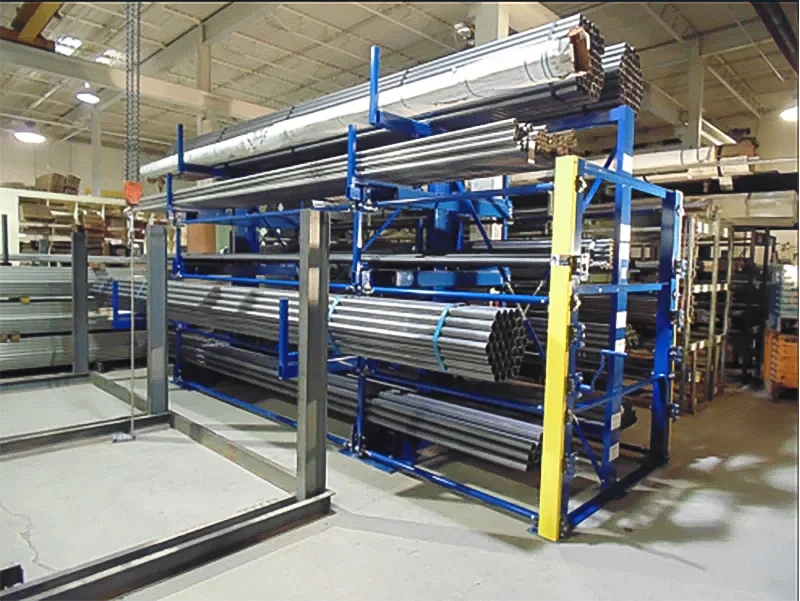
Stop burying your high-value stainless steel tubes and bar stock under mountains of inventory. In the metal processing industry, “digging” for materials isn’t just a waste of time—it’s a direct threat to surface finish quality and operator safety. Transition from chaotic floor stacking to a precision-engineered, crane-accessible system designed for high-mix, heavy-duty applications.
The Hidden Cost of “Business as Usual” in Steel Service Centers
For operations managers at Steel Service Centers or OEM manufacturers specializing in sanitary components (like GHWA), the integrity of your raw material is everything. Whether you are storing 316L stainless steel tubes, polished bars, or delicate aluminum profiles, the traditional methods of storage—floor stacking or standard static cantilever racks—are silently eroding your margins.
The problem is threefold:
- Surface Damage (The “Scratch” Factor): When you drag a bundle of high-purity tubes out from the bottom of a stack using a forklift, friction is inevitable. For industries requiring strict Ra surface roughness standards (e.g., biopharma or food processing), a single deep scratch turns a premium product into scrap metal.
- The “Secondary Handling” Trap: To access a specific heat number or diameter buried in a static rack, your operators often have to move two or three unrelated bundles first. This “shuffle” wastes 15-20 minutes per pick and increases the risk of accidents.
- Space Paralysis: Traditional racks require wide aisles (12-14 ft) for forklifts to maneuver long loads. This is “dead air” that you are paying rent on but cannot use for production.
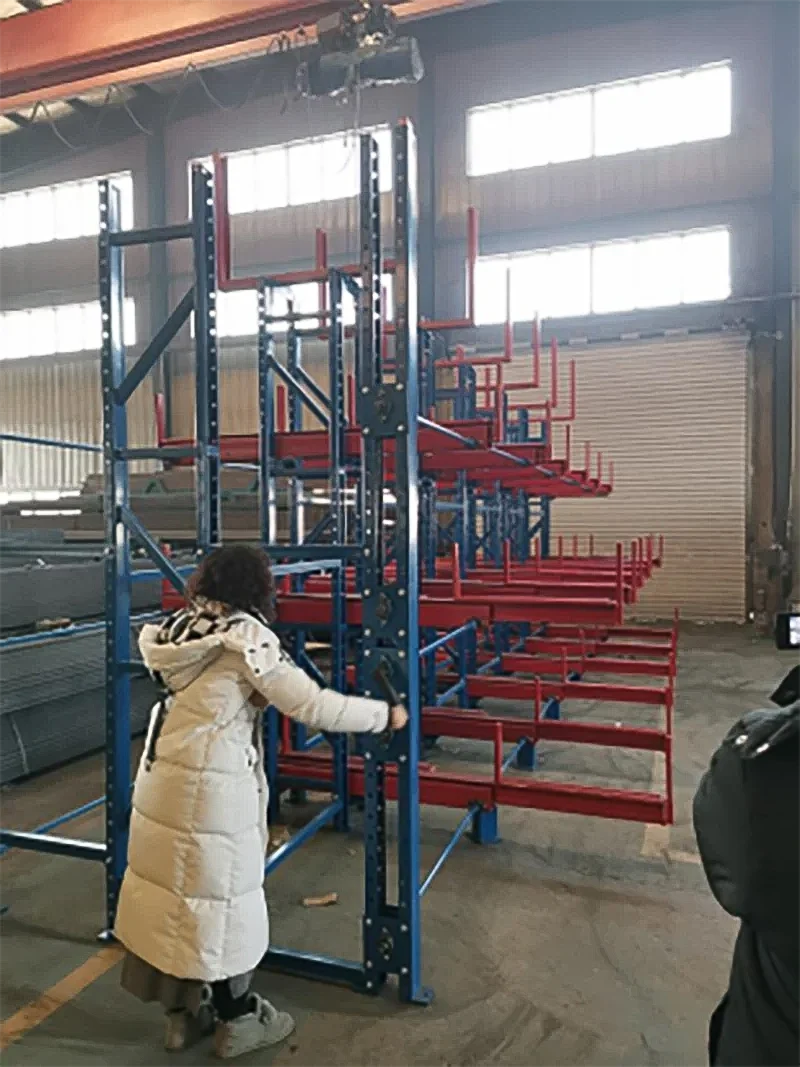
Single-operator usage: Eliminating the need for a forklift during the picking process.
The Solution: 100% Extension for Overhead Crane Access
The Telescopic Cantilever Rack (often called a crank-out or roll-out rack) is not just storage; it is a material handling efficiency tool designed specifically for long, heavy loads. Unlike static racks, every level of this system functions like a drawer.
How It Works
Through a heavy-duty rack and pinion or crank mechanism, a single operator can extend an arm loaded with up to 6,600 lbs (3,000 kg) of steel bars to a 100% open position. Once extended, the material is completely exposed from above.
This architectural change allows you to switch your primary handling equipment from forklifts to overhead cranes. Using a crane with nylon slings or vacuum lifters eliminates the metal-on-metal contact that causes scratches, preserving the critical surface finish of your sanitary tubes and fittings.
Crane Accessibility: 100% extension allows for vertical picking, bypassing aisle width constraints.
Operational Impact: Speed and Safety
Implementing a Roll Out Cantilever system directly impacts your daily throughput:
- Visual Inventory Management: No more lost bundles. Every heat number and SKU is visible and accessible immediately.
- Reduced Aisle Width: Because you are loading from above with a crane, you can shrink your aisles down to roughly 6-7 feet (just enough for a person to walk), recovering up to 50% of your floor space for new machining equipment like saws or laser cutters.
- Ergonomics: Operators no longer need to climb racks or struggle with heavy crowbars to separate bundles. The crank mechanism requires minimal force, even when fully loaded.
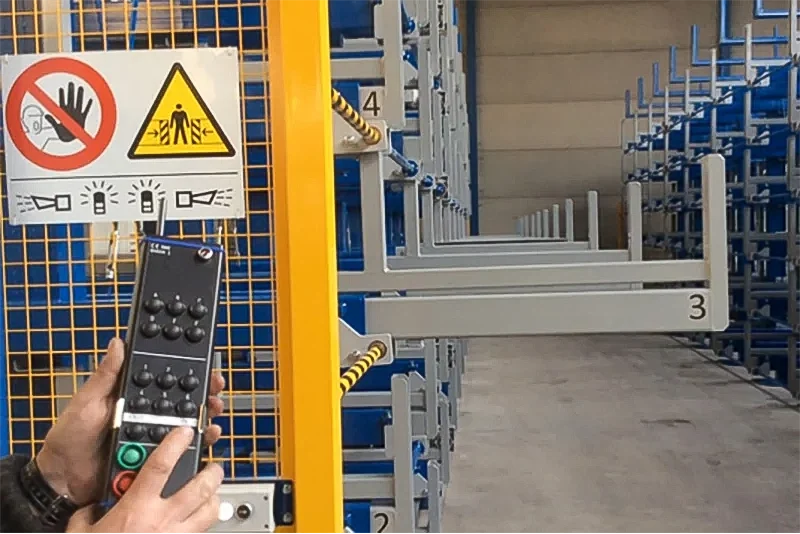
Motorized options allow for effortless handling of the heaviest solid bar stock inventories.
Technical Specifications for Metal Fabrication
Designed for the rigorous environment of a metal service center, our racks are built with structural steel H-beam bases to prevent tipping and ensuring longevity.
| Feature | Specification Range |
|---|---|
| Load Capacity Per Arm | 1,000 lbs – 11,000 lbs (Customizable based on material density) |
| Arm Length | Customizable to match standard tube lengths (e.g., 20ft / 6m bundles) |
| Extension | 100% Full Extension |
| Operation Mode | Manual Crank or Electric Motorized |
| Compatibility | Overhead Cranes, Vacuum Lifters, Magnets, Forklifts |
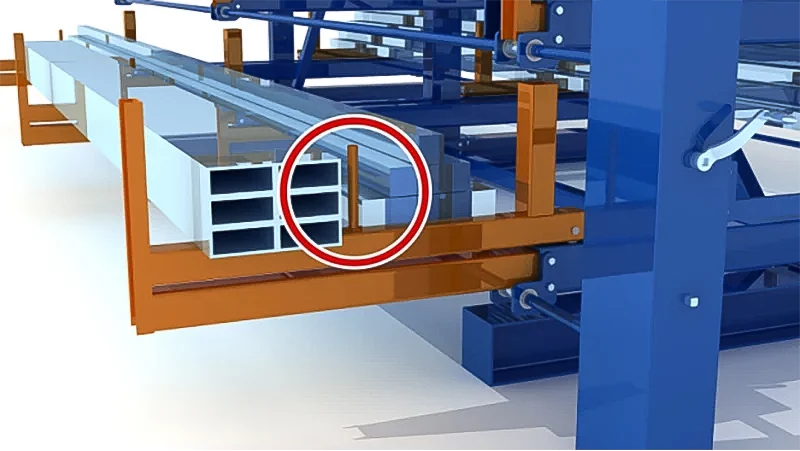
Optional dividers allow for organized storage of mixed SKUs and smaller diameter bar stock.
Frequently Asked Questions
1. Can this system handle delicate polished stainless steel tubes without scratching them?
Yes. The primary advantage of the Roll Out Cantilever is the ability to use overhead cranes with nylon slings. This eliminates the scraping action of forklift tines. We can also add UHMW plastic protection strips to the steel arms for an extra layer of protection.
2. We have limited ceiling height. Is this suitable?
Absolutely. Since the arms extend outwards, you don’t need excessive overhead clearance for a forklift mast to extend. However, you do need enough clearance for your crane and rigging to operate above the top rack level.
3. Can we store different lengths of material on the same rack?
Yes. By adjusting the number of arms or using steel decking/mesh across the arms, you can store random lengths of off-cuts or shorter components alongside full 20-foot bundles.
4. How much force is required to crank out a fully loaded arm manually?
Despite holding thousands of pounds, the high-quality bearing system and gear reduction ratio mean that a single operator can crank out the arm with roughly 20-30 lbs of force—similar to steering a car.
5. Is the system anchored to the floor?
Yes, for safety and stability, the structural H-beam base is anchored to your concrete slab using heavy-duty expansion bolts. The floor requirement is typically 6-inch reinforced concrete, but we will verify this based on your specific load requirements.
Need a Custom Storage Solution?
Speak directly with our technical engineers. We offer free structural designs, heavy-duty catalog evaluations, and quick B2B price quotations.
Request a Quote Now →