 |
Your Glass Tempering Furnace is waiting. Your CNC cutting table is idle after finishing a batch. The bottleneck? A single forklift, tied up unloading a truck across the plant. Every minute of that production gap is a direct hit to your throughput and profitability. It’s time to stop treating your in-process glass storage as passive shelving and start using it as an active asset to accelerate your workflow. |
From Bottleneck to Buffer: Transforming Your Workshop Material Handling
In any modern glass processing Ireland facility, the most significant hidden cost isn’t just the occasional cracked sheet; it’s the cumulative downtime from a stop-and-go workflow. When valuable pieces of cut, edged, or washed glass sit idle, waiting for transport between stations, your entire operation grinds to a halt. This over-reliance on shared equipment like an overhead crane or a single busy forklift for every minor movement creates a chronic production bottleneck. These are the moments that kill your asset turnover rate.
The core problem is treating Work-in-Progress (WIP) storage as a static checkpoint rather than a dynamic part of the production line. Large, stationary racks require a forklift for every single interaction, turning a simple 30-foot move into a coordinated, time-consuming operation.

The Solution: Your ‘Mobile WIP Warehouse’
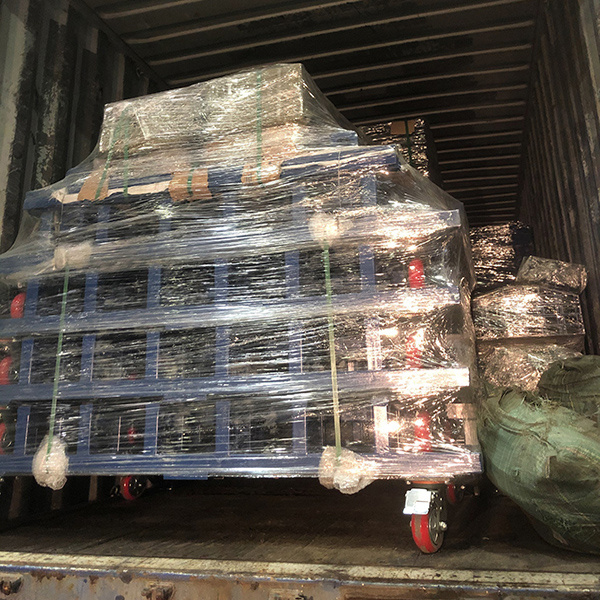
Imagine a system where a single operator can safely and effortlessly move 2,000 Lbs of freshly cut Laminated Glass from the cutting table to the edging machine in under 60 seconds—no forklift needed. This is the reality when you deploy a mobile a frame trolley. It’s not just a rack on wheels; it’s a strategic tool designed to decouple your production stages and create seamless flow.
Here’s how it works:
- Decoupled Workflow: Instead of piling glass onto a stationary table, it’s loaded directly onto a mobile A-frame at the CNC Glass Cutting Table. When the job is done, it’s immediately rolled to the next station, freeing the cutting area for the next batch.
- Operator Empowerment: Equipped with heavy-duty Polyurethane casters, these racks are designed for manual movement. An operator doesn’t need to radio for a forklift and wait 15 minutes; they can move the WIP themselves, instantly.
- Dedicated Staging Areas: You can create dedicated “buffer” zones directly before your IGU machinery or tempering furnace. Mobile racks filled with ready-to-process glass can be queued up, ensuring the machinery never has to wait for materials.

Engineered for the Demands of High-Value Glass Fabrication
A mobile system is only effective if it guarantees the absolute safety of your product. A single scratch on a large sheet of Low-E Glass can render the entire unit worthless. That’s why every detail of these racks is engineered for the glass processing environment.
Unyielding Structure and Absolute Protection
The foundation is a robust A-frame structure built from Q235 structural steel, unified by an industrial Full Welding Process. Unlike inferior racks that use spot-welding, our full-seam welds ensure there are no weak points that could fail under dynamic loads, preventing catastrophic collapses that endanger your team and your product.
To secure the load during movement, a reliable cargo securing system is essential:
- Flexible Ratchet Straps: These straps firmly press the glass sheets against the frame, preventing rattling or shifting that can cause edge chipping or surface scratches during transit across the workshop floor.
- Steel Limiting Rods: For heavier or taller loads, these insertable steel rods provide a rigid external barrier, offering an extra layer of security and peace of mind.
Every surface that contacts your glass is lined with high-density industrial rubber or composite materials. This isn’t just a thin layer of foam; it’s a professional-grade buffer designed to absorb vibrations and protect sensitive coatings, ensuring that a sheet of curved toughened glass arrives at the assembly line in the same pristine condition it left the furnace.

Frequently Asked Questions
1. What is the maximum weight capacity of these mobile glass racks?
Our standard heavy-duty models are typically rated for 2000 Lbs (approx. 900 kg) to 4400 Lbs (approx. 2000 kg). We can also engineer custom solutions for exceptionally heavy materials like thick laminated or bulletproof glass panels.
2. Will the casters damage our concrete workshop floor?
We primarily use non-marking polyurethane (PU) or high-strength nylon casters. These materials are specifically chosen for their durability and their ability to roll smoothly on typical industrial flooring without causing scuffs, marks, or damage.
3. Can these racks be customized for the specific sizes of architectural glass we handle?
Absolutely. We frequently customize the height, length, and base width to accommodate our clients’ specific product dimensions, from standard double glazed units to oversized storefront panels.
4. How do you ensure the protection of delicate Low-E coatings?
All contact surfaces are fitted with soft yet durable rubber or HDPE strips. The material is specifically selected to be non-abrasive and chemically inert, preventing any scratches or reactions with sensitive surface coatings on Low-E or mirrored glass.
5. Beyond manual pushing, can these racks be handled by a forklift or crane?
Yes. Our designs are multi-modal. They include standardized forklift slots for longer-distance transport and robust, welded lifting eyebolts at the top for safe handling with an overhead crane, providing maximum operational flexibility.
Need a Custom Storage Solution?
Speak directly with our technical engineers. We offer free structural designs, heavy-duty catalog evaluations, and quick B2B price quotations.
Request a Quote Now →