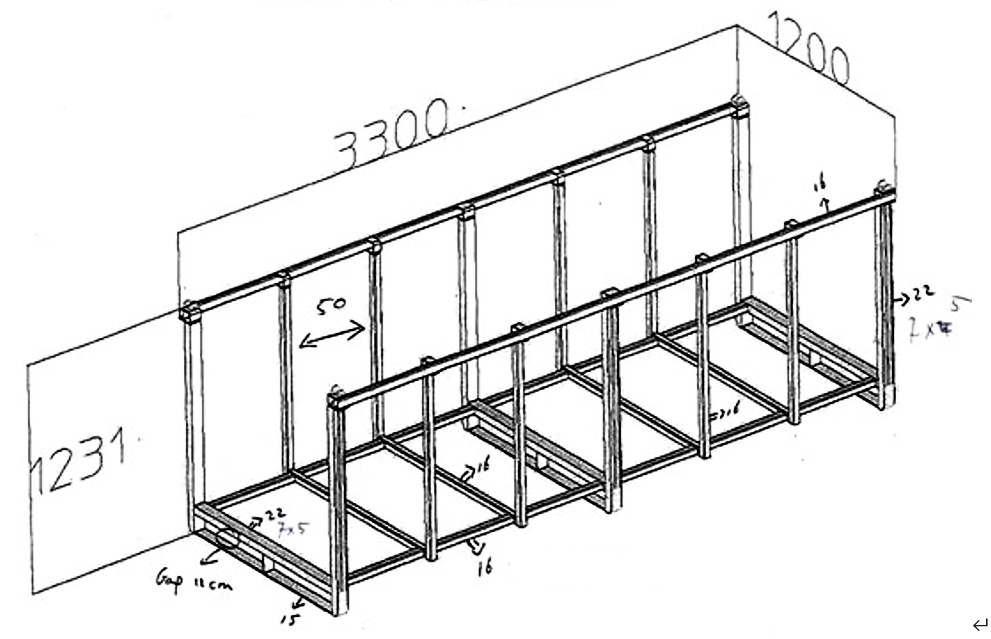
In the industrial storage sector, a client's needs often extend beyond new designs to replicating and supplementing their existing, effective racking systems. This "build-to-print" requirement demands exceptional engineering comprehension, precise dimensional control, and advanced manufacturing processes. This case study details how we successfully manufactured a batch of long-format, fixed-frame portable stack racks that were functionally and structurally identical to a client's original equipment, based on their "Apex Heavy-Duty 3300 series" design drawings.
The Challenge: Precisely Replicating a Client's Existing, Proven Rack Design
A client in the United States approached us with a clear directive: to manufacture a new batch of stacking racks strictly according to their provided design drawings and to ensure the new racks would be seamlessly compatible with their existing fleet. The core challenges were:
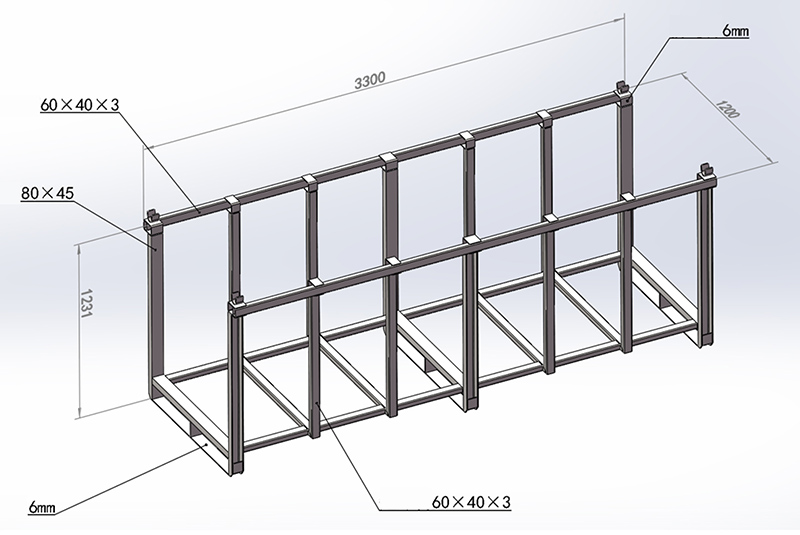
- Design Fidelity: We had to adhere 100% to the original design, including the extra-long 10.8 ft (3300mm) dimension and its unique frame structure.
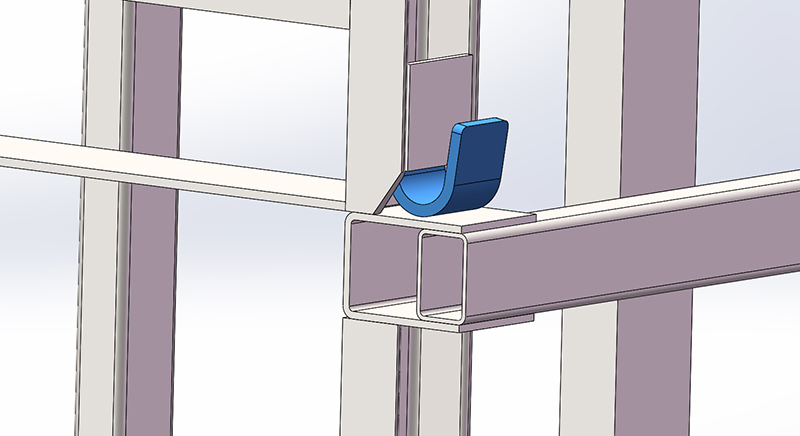
- Replication of Key Components: The U-shaped locating feature used for stacking was critical. The precision of its dimensions and placement directly impacted the safety and stability when stacked with the older racks.
- Consistent Surface Treatment: Based on photos of the existing units, the new racks needed to undergo the exact same hot-dip galvanizing process to guarantee corrosion resistance and longevity in their specific environment.
Our Engineering-to-Manufacturing Solution
Our mission was to accurately translate the 2D drawings into a 3D reality and guarantee its performance. We developed a comprehensive plan to create durable and reliable portable stack racks for our client.
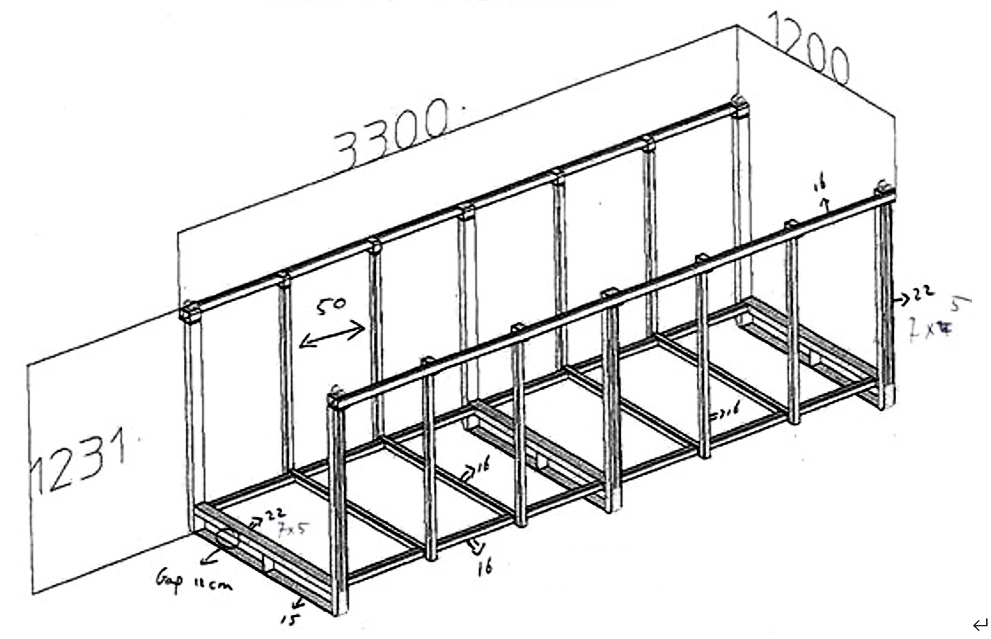
1. Engineering Translation from 2D Drawings to 3D Models
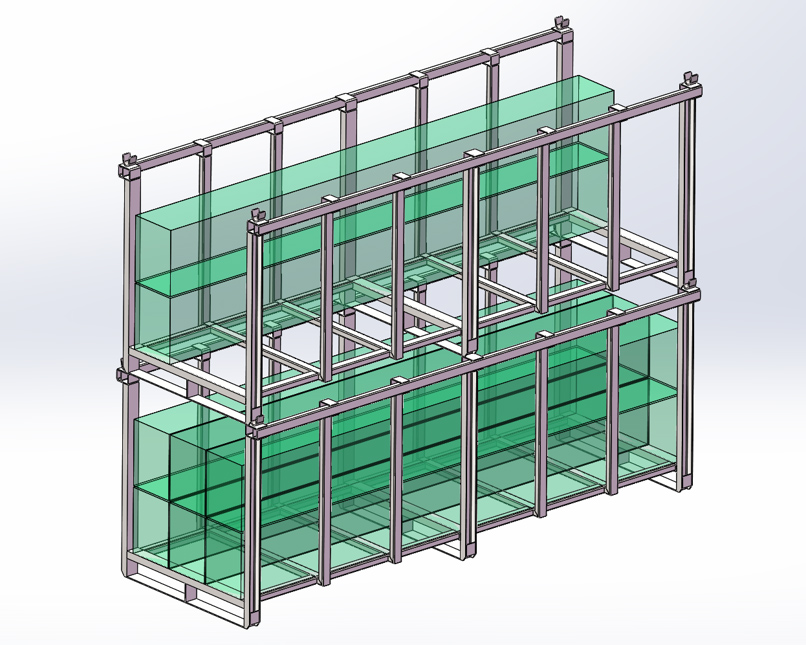
Our first step was to convert the client's 2D drawings into a precise 3D model. This process allowed us to:
- Verify Dimensions: Digitally verify every dimension on the drawing to ensure there were no omissions or contradictions.
- Analyze Structure: Analyze the structural strength of the rack through the 3D model and select appropriate national standard steel grades to ensure it met the client's required 3,300 lb (1.5-ton) load capacity and 2-tier stacking safety requirements.
- Plan the Process: Pre-plan the manufacturing processes, including welding, bending, and galvanizing, to ensure high quality and consistency in the final product.
2. Precision Fabrication of Key Features
We paid special attention to the manufacturing of the core component: the U-shaped stacking locator. By using high-precision molds and positioning jigs, we ensured that the shape and installation position of every U-shaped part were identical to the drawings. This guaranteed that the new and old racks would mesh perfectly and securely when stacked together.
3. A Durable Hot-Dip Galvanized Finish
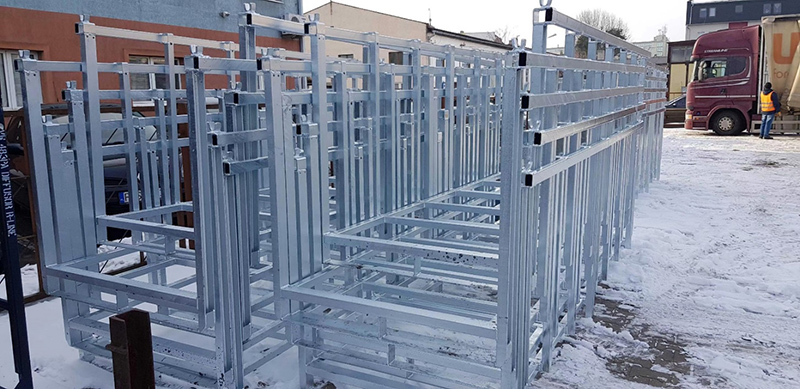
We fully complied with the client's surface treatment requirements, applying a hot-dip galvanized coating to the entire rack (including internal surfaces). This process provides superior rust protection, making it ideal for use in harsh environments such as outdoors or in humid conditions, ensuring the long-term value of the racks.
Conclusion: Your Trusted Build-to-Print Partner
This case study demonstrates that we are not only solution designers but also precision manufacturing executors. We have the capability and systems to transform a client's mature design into a high-quality product with reliable performance and consistent quality, ensuring it integrates perfectly into their existing operational ecosystem.
Do you have a proven design that you need manufactured to precise standards? Contact our team to discuss your build-to-print requirements.
Need a Custom Storage Solution?
Speak directly with our technical engineers. We offer free structural designs, heavy-duty catalog evaluations, and quick B2B price quotations.
Request a Quote Now →